
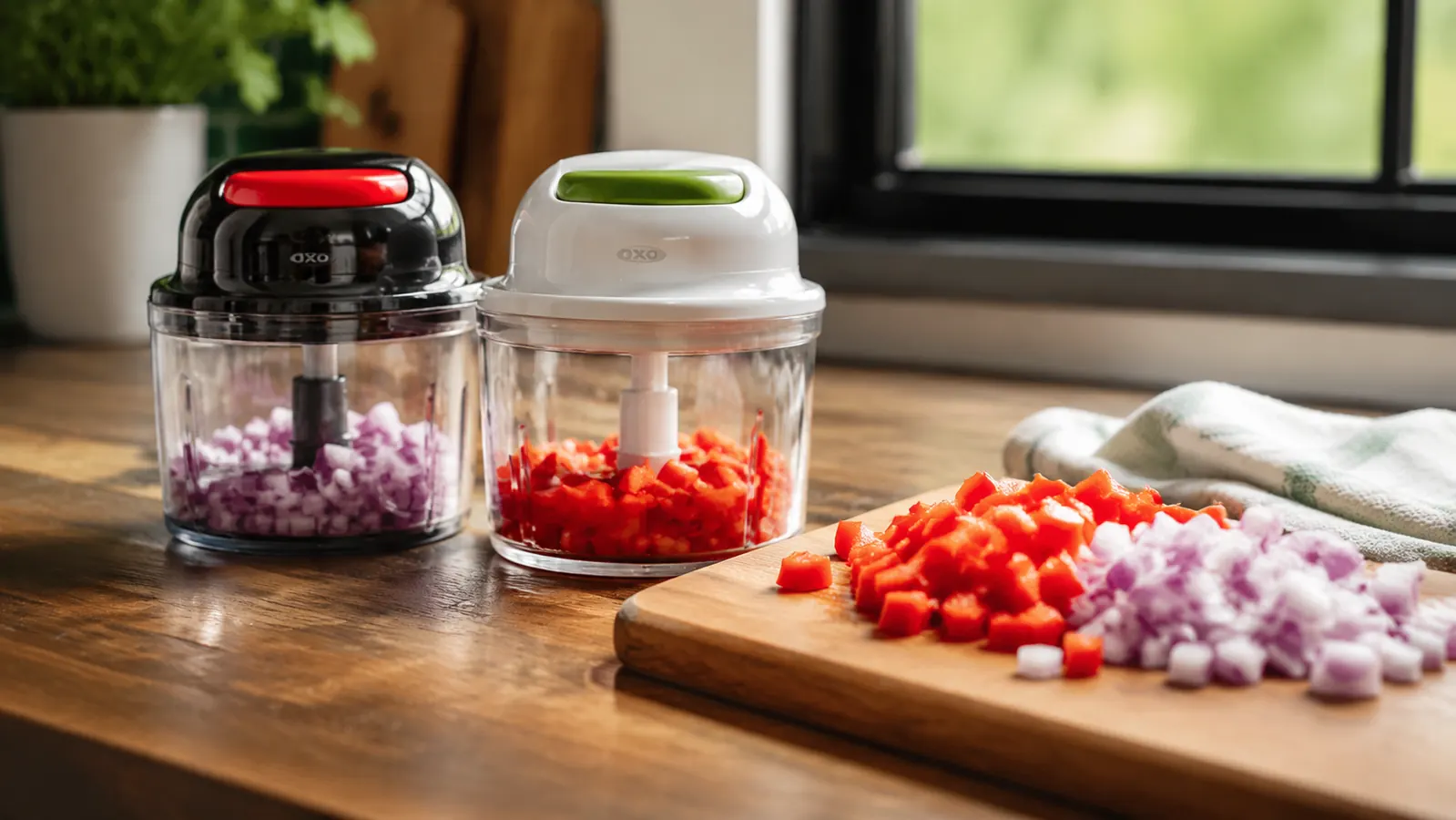
If you have spent any time looking for a no-electric, press-down food chopper, you have bumped into two names more than any others: the Fullstar Pro Chopper and the Ninja food chopper. Both sit in the same general price range. Both promise fast, uniform dicing with no batteries and no power cord. The question that actually matters is which one holds up after you have run three pounds of onions through it every Sunday for a few months.
I have been cooking from scratch for over thirty years, and I have owned my share of choppers that started strong and fell apart by week four. After putting both of these through a real meal-prep routine, here is what I found.
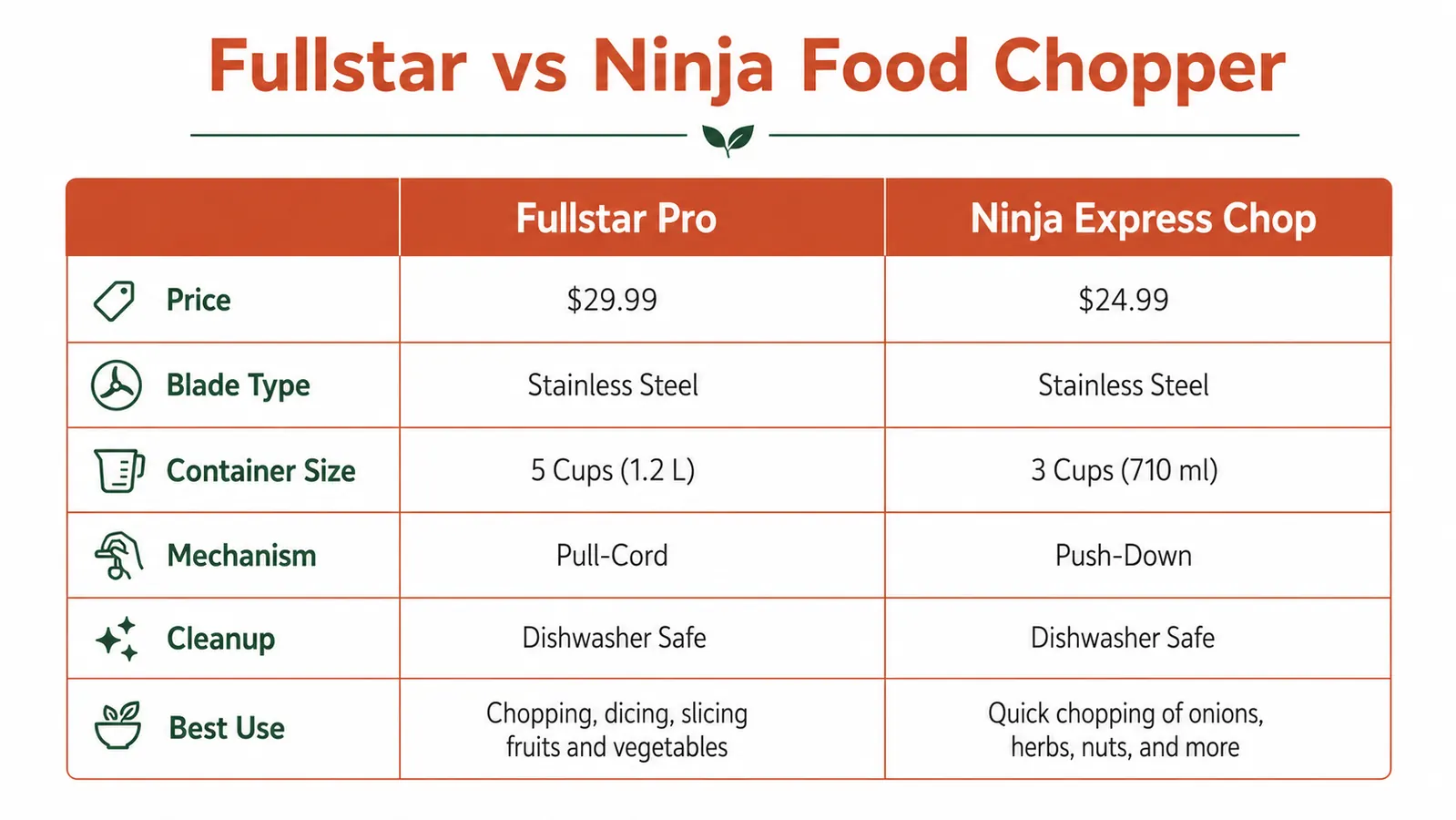
| Fullstar Chopper | Ninja Food Chopper | |
|---|---|---|
| Price Range | Check today's price on Amazon | Mid-range pricing |
| Chopping Mechanism | Press-down blade grid (manual plunge) | Rotary pull-cord (electric-free spin) |
| Blade Material | Stainless steel grid blades | Stainless steel S-blade |
| Container Capacity | 1.5 cups / holds the chopped pieces below | 16 oz bowl with lid |
| Cut Style | Uniform small dice (consistent grid pattern) | Rough chop (variable piece size) |
| Best For | Onions, peppers, celery, garlic, soft veggies | Garlic, herbs, nuts, small batches |
| Cleanup | All parts top-rack dishwasher safe | Bowl and blade dishwasher safe, cord unit hand-wash |
| Footprint / Storage | Compact, stackable, drawer-friendly | Taller profile, cord wraps around base |
| Ratings (Amazon) | 4.5 stars / 128,000+ reviews | 4.5 stars / 55,000+ reviews |
Where the Fullstar Pro Chopper Wins
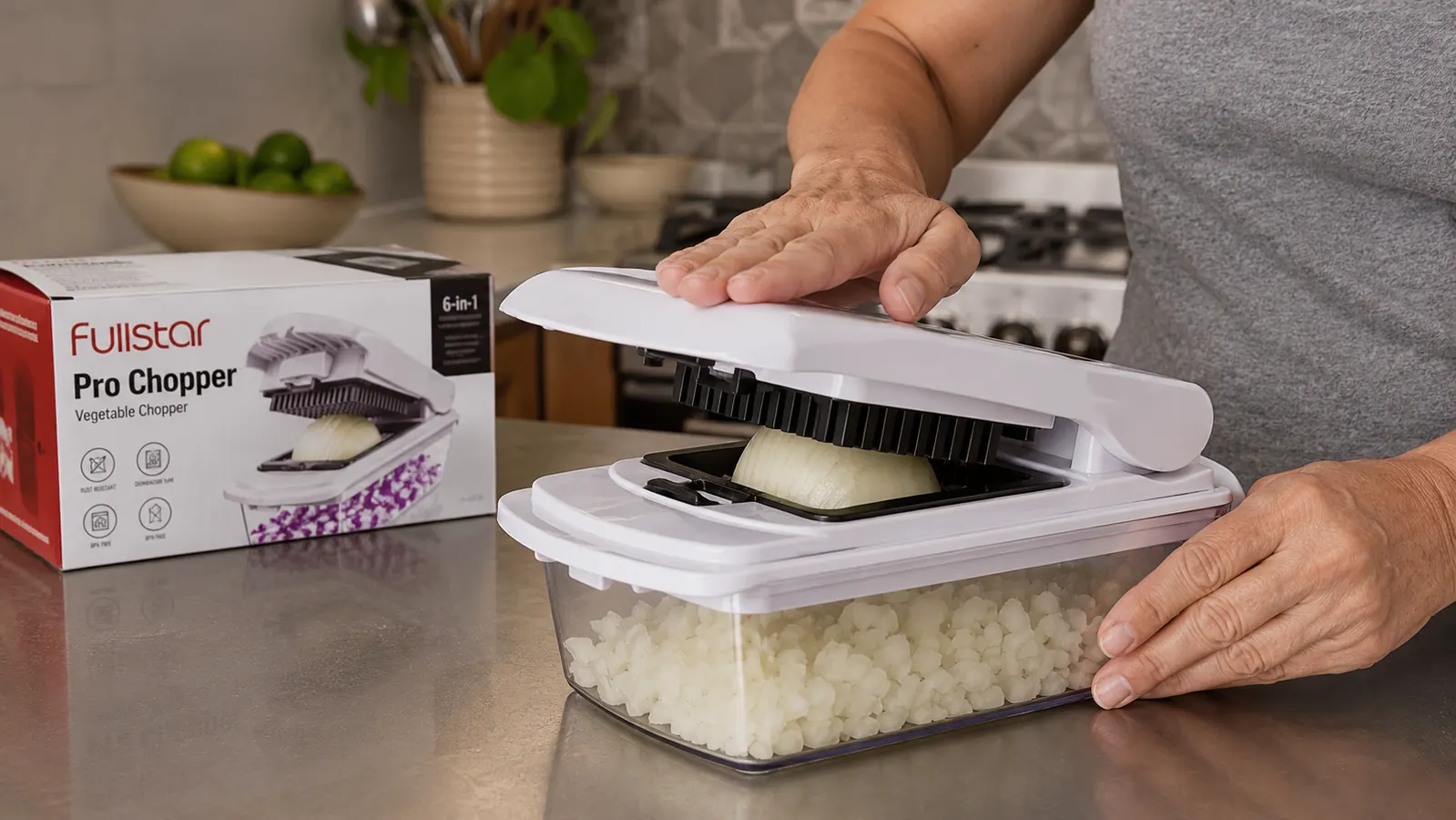
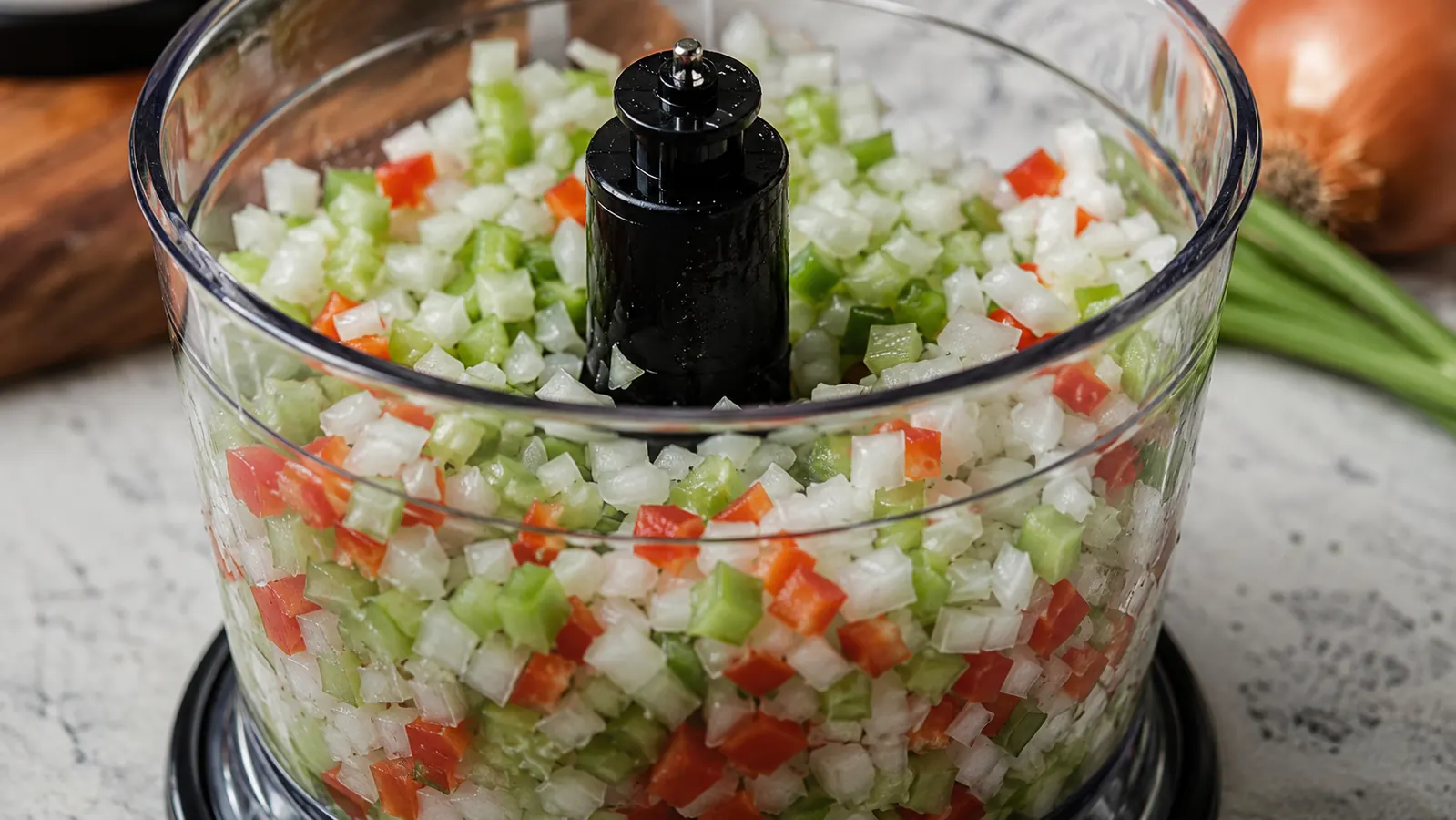
The Fullstar's biggest advantage is the cut it produces. The blade grid is a fixed pattern of sharp stainless steel squares, and when you press down on a halved onion, you get consistent small dice every single time. If you have ever made a big batch of sofrito, fajita filling, or a casserole that needs everything cut to the same size for even cooking, that consistency matters. The Ninja's pull-cord mechanism spins an S-blade and produces a rough chop that is fine for garlic and herbs but uneven when you push it through a bell pepper or a stalk of celery.
The second win is the integrated container. As you chop, the diced pieces fall directly into the clear plastic bowl below the blades. You can chop an entire onion, pop the lid on the container, and put it straight into the fridge. One less bowl to wash, one fewer step in the process. When you are doing Sunday prep for the week, those small efficiencies add up fast. I have gone through five full onions in under ten minutes using the Fullstar without getting so much as a bit of onion juice on my hands.
Stop crying over onions. The Fullstar Pro Chopper handles your whole weekly prep in minutes.
Over 128,000 verified Amazon ratings back this up. Check today's price before it changes.
Amazon Check Today's Price on Amazon →The Fullstar is also the easier tool to store. It nests flat. The blade insert sits inside the container, the press-down top stacks on that, and the whole thing fits in a drawer without drama. That is not a small thing in a kitchen where counter space is limited. The Ninja's pull-cord design means there is a cord mechanism to deal with at storage time, and the taller profile means it takes up shelf or cabinet space whether you like it or not.
Where the Ninja Food Chopper Wins
The Ninja earns its spot for one specific use case: small batches of garlic, fresh herbs, and nuts. Because the pull-cord spins the blade at high speed for a fraction of a second per pull, it minces very small or irregular items faster and more completely than a press-down grid can. If you mince garlic several times a week, the Ninja will do it quicker than the Fullstar's grid, which sometimes struggles to grip a single small clove cleanly. A few pulls of the Ninja cord and you have evenly minced garlic in about four seconds.
The Ninja also handles wetter tasks a little more forgivingly. Tomatoes and other high-moisture vegetables can slide around under the Fullstar's press grid and produce uneven results unless you control the placement carefully. The Ninja's spinning blade does not care as much about placement. For salsas and relishes where rough texture is acceptable, that flexibility is real. The tradeoff is that you surrender precise cube control and take on a slightly more involved cleanup around the pull-cord mechanism.
For uniform dice on onions, peppers, and celery, the Fullstar wins every prep session. For mincing garlic and fresh herbs, the Ninja is genuinely faster. Know what you cook most and pick accordingly.
Blade Durability: What Months of Use Actually Shows
This is the question that does not show up in most comparison pieces because most reviewers do not use these things past the first two weeks. The Fullstar's blade grid is a fixed stainless steel insert. You cannot sharpen it, and eventually the edges do dull, but in my experience it takes a long time to get there with the produce most home cooks run through it. Onions, bell peppers, cucumbers, and celery do not punish a blade the way root vegetables or hard squash do. If you stick to softer produce, the Fullstar grid stays sharp through a year of regular use.
The Ninja's S-blade holds up well too, but replacement blades for the Ninja Express Chop are not as easy to find as the Fullstar replacement inserts. Fullstar sells the replacement blade grids separately on Amazon, which is a real practical advantage. If the blade dulls a year from now, you are buying an inexpensive insert, not a whole new chopper. That is the kind of long-term thinking worth factoring into the purchase.
Cleanup: The Part Nobody Talks About Enough
Both choppers have dishwasher-safe parts, but they are not equal in practice. The Fullstar breaks down into the container, the blade insert, and the press-top. Three flat pieces, all top-rack safe. Rinse them under the faucet for five seconds and they are ready for the dishwasher. There are no hinges, no crevices around a cord housing, and no rubber seals to peel food out of.
The Ninja requires that the cord mechanism on the lid gets hand-washed. The cord pulls through a housing that can trap onion juice and small food particles. It is not a major project, but it is more steps than the Fullstar. When you are cleaning up after a big prep session and the sink is already full, those extra steps are friction. Over hundreds of uses, the Fullstar's simpler teardown is a genuine quality-of-life advantage.
Who Should Buy Which
Buy the Fullstar Pro Chopper if you cook from scratch regularly, you prep vegetables in bulk (onions, peppers, celery, cucumbers), you want uniform dice rather than rough chop, and you care about cleanup speed. It is the better fit for 85 percent of home cooks who want a manual chopper for everyday meal prep. The 128,000-plus Amazon reviews tell you this is not a niche product. It is a workhorse that a lot of real cooks use every week.
Buy the Ninja food chopper if your primary use is mincing garlic, chopping fresh herbs, or processing nuts for toppings, and you only need small batches at a time. It is not the right tool for uniform vegetable prep, but for the tasks it is designed for, it earns its place. If you are honest about how you cook and those are the jobs you need done, the Ninja makes sense.
If you cook everything, you might eventually want both. They do genuinely different jobs well. But if you are picking one and your kitchen has limited cabinet real estate, the Fullstar covers more of what the average home cook actually does. For most people doing weekly meal prep with a mix of aromatics and vegetables, the Fullstar is the clearer call. You can read a deeper breakdown of how it performs over time in the long-term Fullstar chopper review. And if you want a step-by-step guide to putting it to work on onions specifically, the guide on dicing onions with a chopper covers the technique in full.
The Fullstar Pro Chopper: the one chopper most home cooks actually need.
Uniform dice, integrated container, dishwasher safe, and built to last. See what it costs today.
Amazon Check Today's Price on Amazon →