
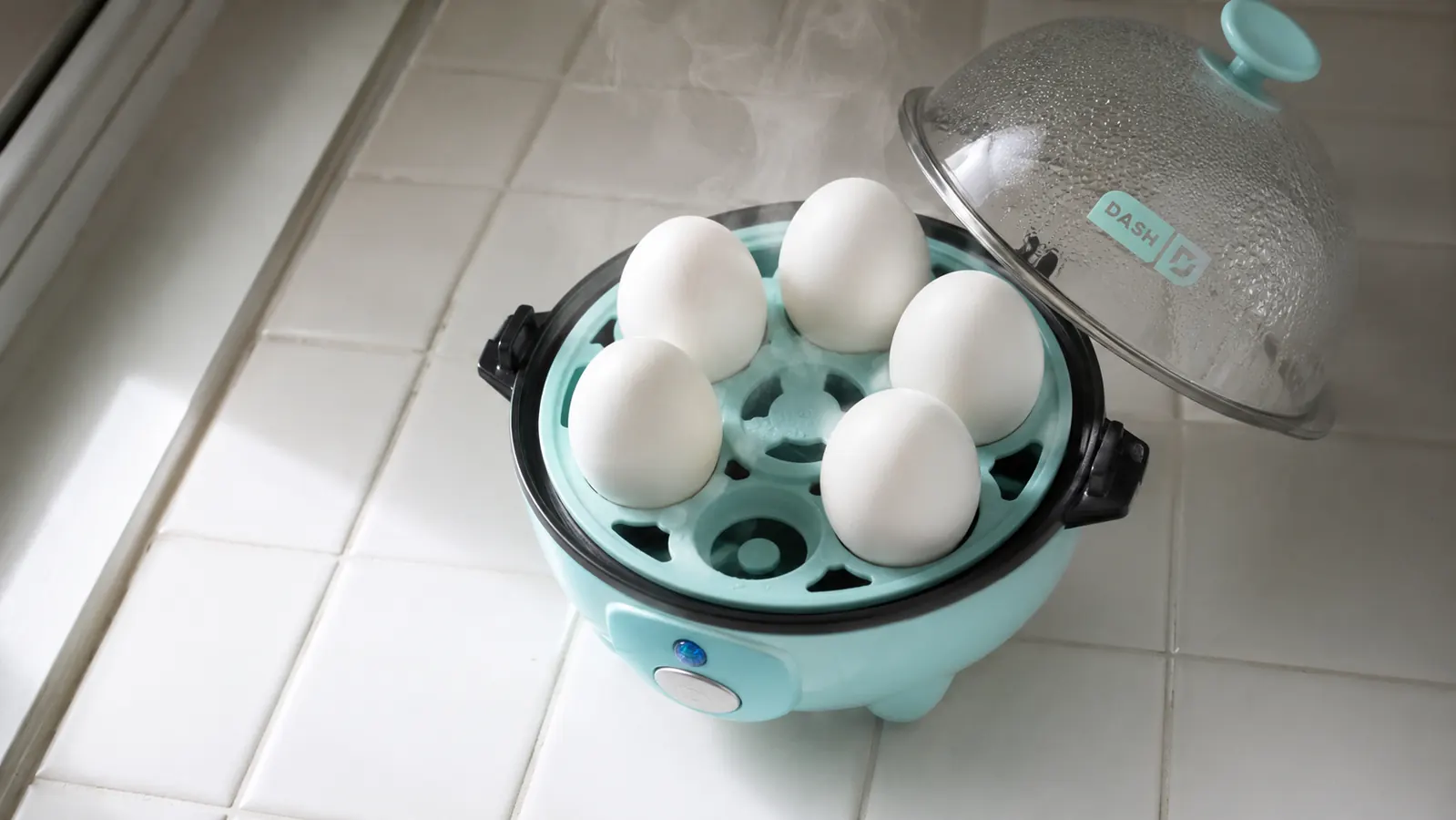
My neighbor Cheryl texted me a photo of the Dash Rapid Egg Cooker back in the spring with the message: 'Is this worth buying or is it just another drawer orphan?' I told her I would get back to her after I spent some real time with it. That was four months and a lot of eggs ago. The short answer to Cheryl's question is: it is worth buying, but not for the reasons most of the reviews say, and there are a few things about it you need to know before you pull the trigger.
The Dash Rapid Egg Cooker has over 136,000 reviews on Amazon and a 4.6-star average. At that rating, with that many people weighing in, you might expect a perfect product. It is not. It has real quirks, a couple of limitations that will matter depending on how you cook, and at least one maintenance step that the box does not bother to mention. This review covers all of it, because that is the kind of information you actually need.
The Quick Verdict
Genuinely excellent at its one core job, but the quirks and the mineral cleaning habit are things most reviews gloss over. Know them going in and you will not be disappointed.
Amazon Check Today's Price →Before you keep reading, check today's price. It sometimes drops below what you see in search results.
The Dash Rapid Egg Cooker is one of those products where the current price on Amazon tells you whether you are getting a deal or not. Over 136,000 reviewers have weighed in at 4.6 stars. See what it is selling for right now.
Amazon Check Today's Price on Amazon →How I Tested It and What I Was Looking For
I made a point of not just using the Dash the way it was designed to be used and calling it a day. I ran it at the boundaries: I tried it with eggs straight from the refrigerator versus room-temperature eggs to see if starting temperature changed results. I used the poaching cups with extra-large eggs, not just large. I skipped the measuring cup one morning on purpose to see what happened. I also deliberately ran it at high altitude, since I spend part of my time in a mountain kitchen where water boils differently.
The goal was to find the edges of where this machine works exactly as advertised and where it starts to slip. Because that is where the useful information lives. Anyone can tell you it makes a good hard-boiled egg under ideal conditions. The question worth answering is what happens when conditions are not ideal.
Over four months I ran the Dash through hard-boiled, soft-boiled, poached, and steamed food tests, kept notes on results, and paid attention to the things that kept coming up in the Amazon question-and-answer section as sources of confusion for buyers. That is what this review is based on.
The Thing Nobody Tells You About the Measuring Cup
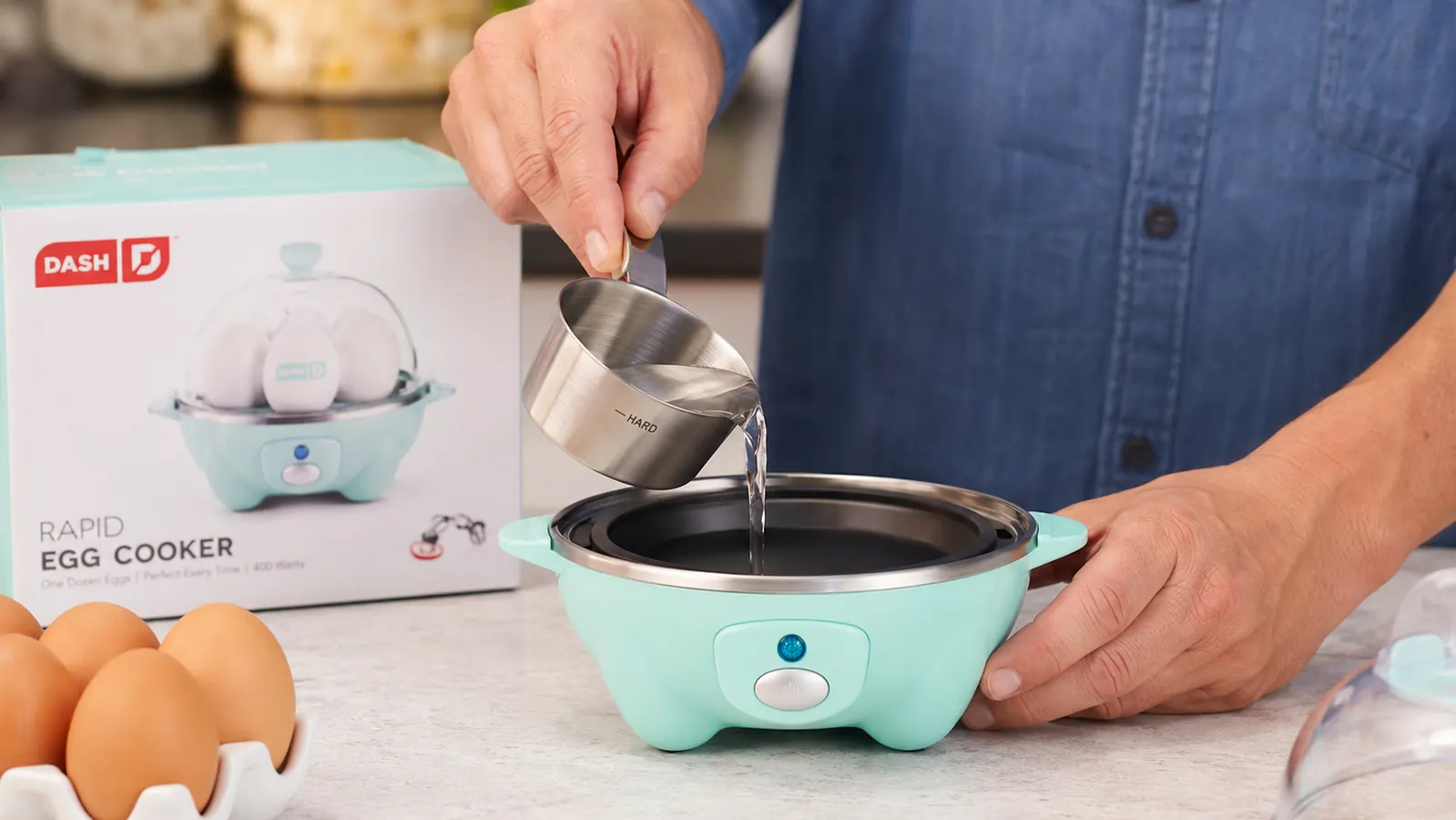
The measuring cup is the whole brain of this machine. That is not an overstatement. The Dash does not have a timer or a temperature dial. It has a heating plate and a precise water amount. When the water runs out, the machine shuts off and beeps. The doneness of your eggs is determined entirely by how much water you put in. More water equals more steam time equals harder, more fully cooked eggs. Less water equals softer, runnier centers.
Here is the part that catches people off guard: the etched lines on the measuring cup are calibrated for cold eggs. If your eggs are closer to room temperature, the same water level will produce slightly more cooked eggs than you expected, because a cold egg needs some of the steam energy just to warm up before cooking begins. The difference is minor for hard-boiled eggs, where the margin is forgiving. For soft-boiled eggs, where you are chasing a specific yolk texture, starting egg temperature matters more than most people realize.
My advice: always start with cold eggs straight from the refrigerator, and use the cup as marked. The machine was calibrated that way. Any deviation from that baseline introduces a variable the manufacturer did not account for.
Altitude Changes the Results (and This Is a Big Deal for Some of You)
If you live anywhere above about 3,500 feet, you need to know this before you buy. Water boils at a lower temperature at altitude, which means it also evaporates faster in a steam environment. The water in the Dash will run out sooner at altitude, which means your eggs will be undercooked if you follow the sea-level markings on the cup.
The fix is simple: add a small amount of water beyond the marked line. A few milliliters is usually enough. At my mountain kitchen, I found that adding water just above the marked line for the doneness I want produces results that match what I get at sea level. It takes one or two test batches to dial in your adjustment, but once you know your number you just use it every time. Dash does note the altitude issue in the included guide, but it buries it in fine print rather than flagging it prominently, which is why so many altitude-dwelling buyers report underdone eggs and blame the machine when the machine is actually fine.
The measuring cup is the whole brain of this machine. That line on the cup is not a suggestion. It is the recipe.
The Mineral Buildup Issue Nobody Mentions in Reviews
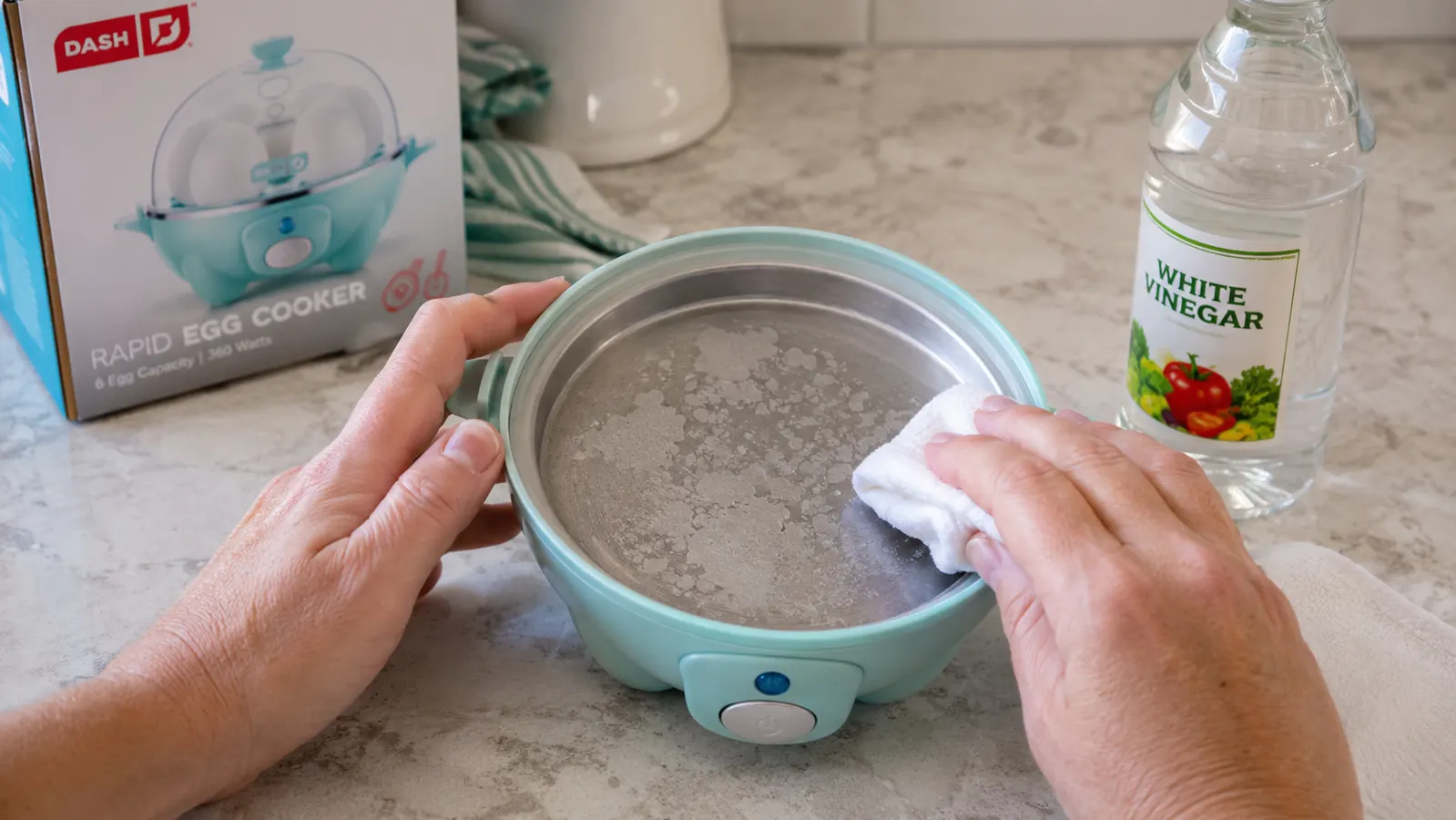
In areas with hard tap water, the heating plate inside the Dash will develop white mineral deposits over time. This is not a defect. It is normal limescale, the same thing that coats your electric kettle or your showerhead. But unlike an electric kettle where the scale is easy to spot, the Dash's heating plate is a flat disc at the bottom of a small cavity, and the deposits build up gradually in a way that is easy to ignore until performance starts to slip.
When enough limescale accumulates on the heating plate, the machine takes longer to generate steam because the mineral layer acts as partial insulation. The result is softer eggs than you expected from your usual water amount, and eventually a machine that seems to have lost some of its reliability. The fix costs nothing: a tablespoon of white vinegar added to the water once a month, then run a cycle without eggs. The acid dissolves the deposits and your machine goes back to factory spec. Do that regularly and you will never notice the buildup.
I checked the instruction sheet that came in the box. The descaling step is mentioned in small print toward the end. I would not call it prominently communicated. It should be step one in the care instructions, not a footnote. But now you know.
Where the Dash Genuinely Surprised Me
I went in expecting a basic single-purpose appliance. What surprised me was the poaching function. I am not naturally a poached-egg person because stovetop poaching has always been more fuss than it is worth for a Tuesday morning. You swirl the water, you worry about the white spreading out, you fish the egg out with a slotted spoon and wonder if the center is right. I find it annoying.
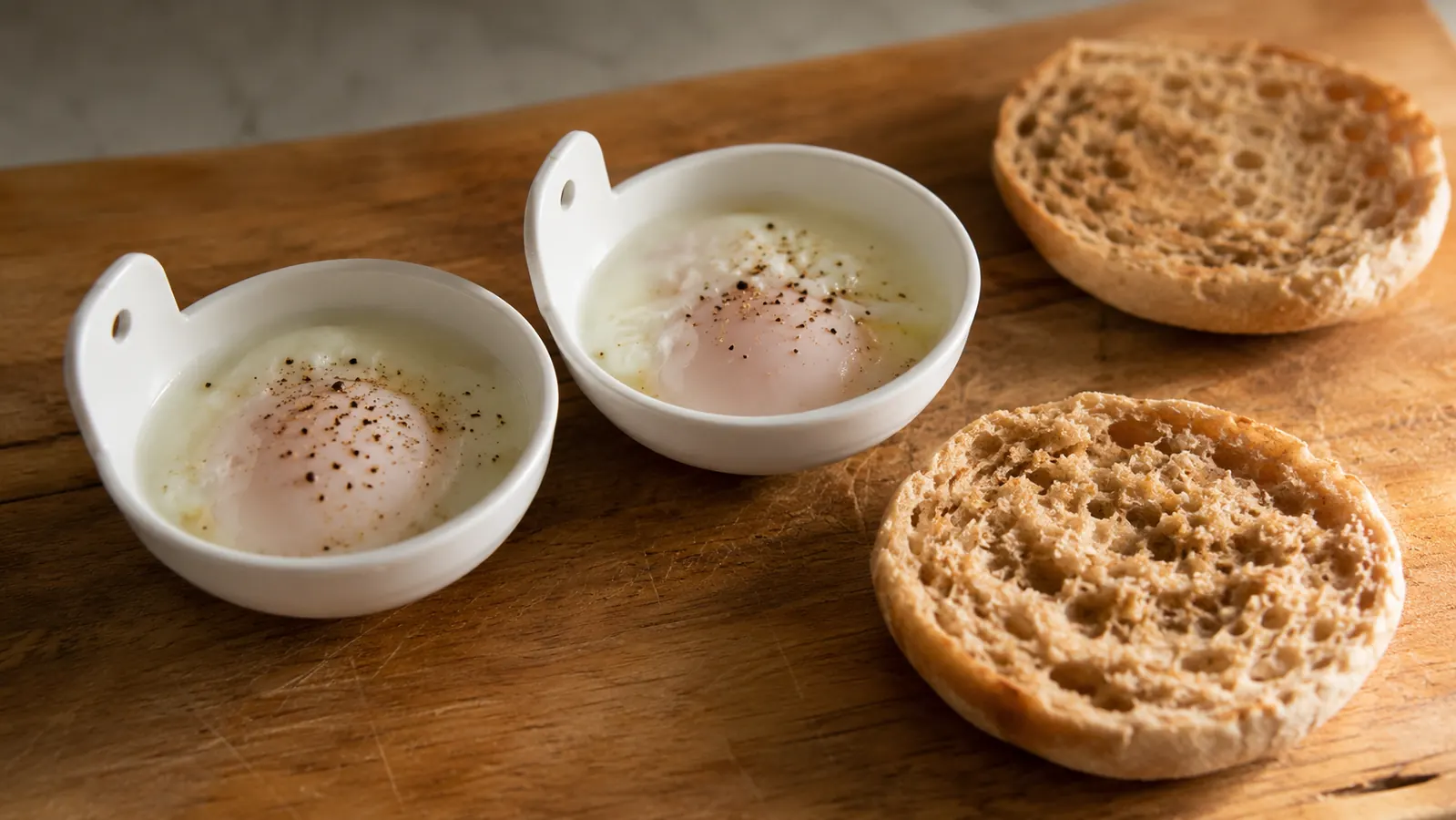
The Dash poaching cups changed that. You crack the egg into the cup, set it on the tray, add the prescribed water, press the button. Seven minutes later you have a properly set white with a soft center. The eggs are compact because the cup shapes them, which is not identical to the broad drapey poached egg at a restaurant brunch, but for everyday cooking it is genuinely good. I now poach eggs two or three mornings a week when I used to do it maybe once a month.
The other surprise was what happens with the steaming tray. Dash advertises it as a way to steam vegetables, but it is also excellent for reheating leftover rice or couscous without drying it out. A small portion in the steaming tray for a few minutes comes out moist and fresh in a way that the microwave never quite achieves. That is not a use case Dash markets, but it is one I use weekly now.
The Extra-Large Egg Problem
The Dash is designed around large eggs, which is what most recipes and most carton standards default to. If you buy extra-large eggs, which are more common at warehouse stores and some specialty markets, you may find that all seven slots in the tray do not fit without the eggs touching the dome of the lid. With six extra-large eggs I have had no issues. With seven, the lid sometimes sits slightly uneven, which lets steam escape and throws off the water-timing equation.
This is not a deal-breaker, but it is worth knowing if you regularly buy extra-large. Use six eggs instead of seven and everything works exactly as expected. The seven-egg capacity listed on the box applies to large eggs specifically.
What I Liked
- Hands-off operation from start to beep: no watching, no timers, no babysitting
- Steam cooking produces eggs that peel far more easily than water-boiled, even fresh eggs
- Poaching cups make mid-week poached eggs genuinely practical for the first time
- All removable parts are dishwasher safe with no special care needed
- Takes up minimal counter space, smaller than most people expect from photos
- At this price there is almost no financial risk in trying it
- Works for hard-boiled, soft-boiled, poached, and light steaming in one compact unit
Where It Falls Short
- Measuring cup calibration is for cold eggs; room-temperature eggs will overcook at the same settings
- Altitude users need to add extra water beyond the marked lines or eggs come out undercooked
- Heating plate requires monthly vinegar descaling in hard-water areas, not clearly documented
- Seven-egg capacity is for large eggs only; extra-large eggs should be capped at six
- The finish alarm is loud with no volume control, a real issue in quiet early-morning kitchens
- Short power cord may force placement near an outlet rather than your preferred counter spot
What the Bad Reviews Are Actually Complaining About
I read through several pages of the one-star and two-star reviews on Amazon before writing this. The complaints cluster into a few predictable categories. The most common is undercooked eggs, which almost always traces back to two root causes: someone living at altitude using sea-level water measurements, or someone using room-temperature eggs and not adjusting. The machine is not broken in those cases. The instructions just do not explain clearly enough what is happening.
The second most common complaint is inconsistent results over time. That is almost always the limescale problem described above. The machine worked great for three months and then started producing softer eggs. The heating plate has buildup and needs a vinegar cycle. Again, the machine is not broken. It needs routine maintenance that Dash should communicate better.
A smaller number of complaints are about the lid cracking or warping. I cannot speak to those from my own experience. My lid has held up fine. My guess is those incidents involve running the machine dry repeatedly or washing the lid in a high-heat dishwasher cycle, both of which are hard on plastic components.
Who This Is For
The Dash fits people who eat eggs several times a week and have quietly accepted that stovetop boiling produces uneven results. If you have ever peeled an egg and been annoyed that half the white came off with the shell, or pulled what was supposed to be a soft-boiled egg out of a pot and found a chalky gray yolk, this machine solves those specific problems. It is also a strong fit for people who want to add more protein to their routine without adding more morning complexity. Press one button, walk away, come back to done eggs. That is hard to argue with.
Who Should Skip It
Skip it if you only eat eggs occasionally and counter space is genuinely at a premium. The stovetop does work. This machine is for people who cook eggs often enough that the consistency and the hands-off convenience are worth having a small dedicated appliance. Skip it also if you live at high altitude and are not willing to run one or two test batches to find your adjusted water level. And if the thought of monthly vinegar cleaning feels like more maintenance than you want from a small kitchen gadget, manage that expectation before you buy.
Know the quirks, love the results. See today's price and check color availability.
The Dash Rapid Egg Cooker is genuinely good at what it does. With 136,000-plus reviewers at 4.6 stars, most people land in the love column. Use the tips in this review to set it up right from day one and you will be in that group.
Amazon Check Today's Price on Amazon →