
My neighbor Dave has been telling me for two years that handheld frothers are all the same: a cheap coil on a weak motor that makes oversized bubbles and dies in three months. He bought one from a bargain bin at a grocery store and that was his entire data set. When I showed up with the Zulay Kitchen frother and a decent latte, he spent five minutes examining it like a detective before admitting the foam looked real. That is as close to a ringing endorsement as Dave gets, and it is a good starting point for what this review is actually about.
Because here is the thing nobody tells you upfront: a frother like this one is not plug-and-play in the way a toaster is. There is a technique gap between buying it and getting genuinely good foam, and the gap is wide enough that plenty of people declare it useless before they ever close it. I want to cover that honestly, along with what the Zulay actually gets right, where it earns its spot on the counter, and the one situation where you really should spend more money on a different machine.
The Quick Verdict
A high-performing handheld frother that produces dense, real cafe-style foam once you learn the two-step technique. Battery life is better than most competitors, build quality is serviceable for the price, and cleanup is essentially nothing. The main caveat: beginners get mediocre results until they understand why wand angle and milk temperature matter so much.
Amazon Check Today's Price →If bad foam is the reason you gave up on homemade lattes, the problem probably was not the frother.
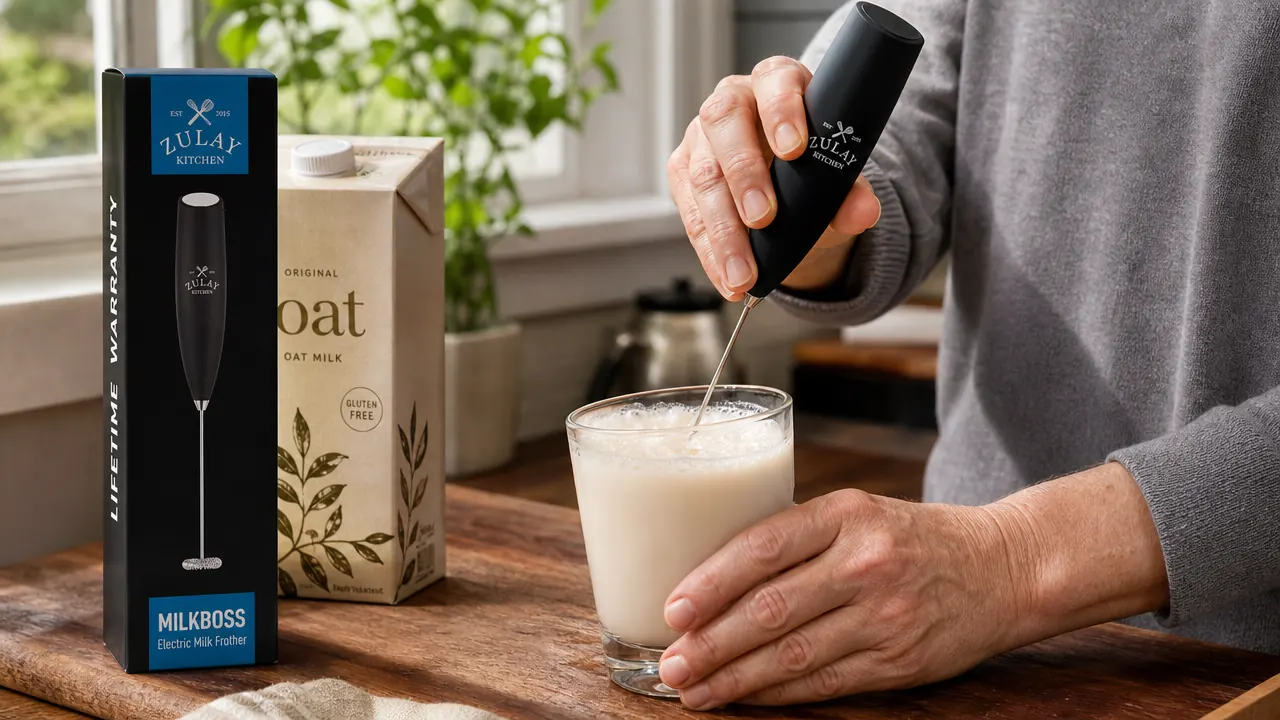
The Zulay Kitchen frother wand ships with Duracell batteries included and is ready to run out of the box. More than 237,000 buyers have it and most of the one-star reviews trace back to the same two technique mistakes this article covers. Check the current price on Amazon and give it a proper try.
Amazon Check Today's Price on Amazon →How I've Used It and What I Tested
I have been using the Zulay frother for lattes, cappuccinos, and matcha drinks across multiple months of regular morning use. But for this review I also deliberately ran it through the scenarios that trip people up: cold milk straight from the fridge, ultra-thin almond milk, the cheap store-brand oat milk versus the barista-style version, and using it the way a first-timer typically would before they have read any instructions. I also ran the motor at high frequency over a concentrated stretch to get a real read on battery drain rate.
The short version of what I found: this frother is significantly better than its price suggests, but it rewards people who take five minutes to understand how it works and punishes people who expect it to perform like a steam wand without any setup. The quality gap between doing it right and doing it wrong is bigger with this tool than almost anything else in my kitchen.
I also paid attention to the noise level, because this gets mentioned in a lot of one-star reviews as if it is a defect. Spoiler: it is not quiet. The Z1 motor is a high-speed electric motor spinning a coil through liquid. It makes the kind of buzzing whir you would expect from something operating at that speed. In a quiet kitchen at 6 a.m., you will hear it. If that is a dealbreaker for you, an automatic electric frother like the Aeroccino operates at a lower frequency. But for most people, 20 seconds of buzz is a fair trade for good foam.
The Technique Gap: What Nobody Tells Beginners
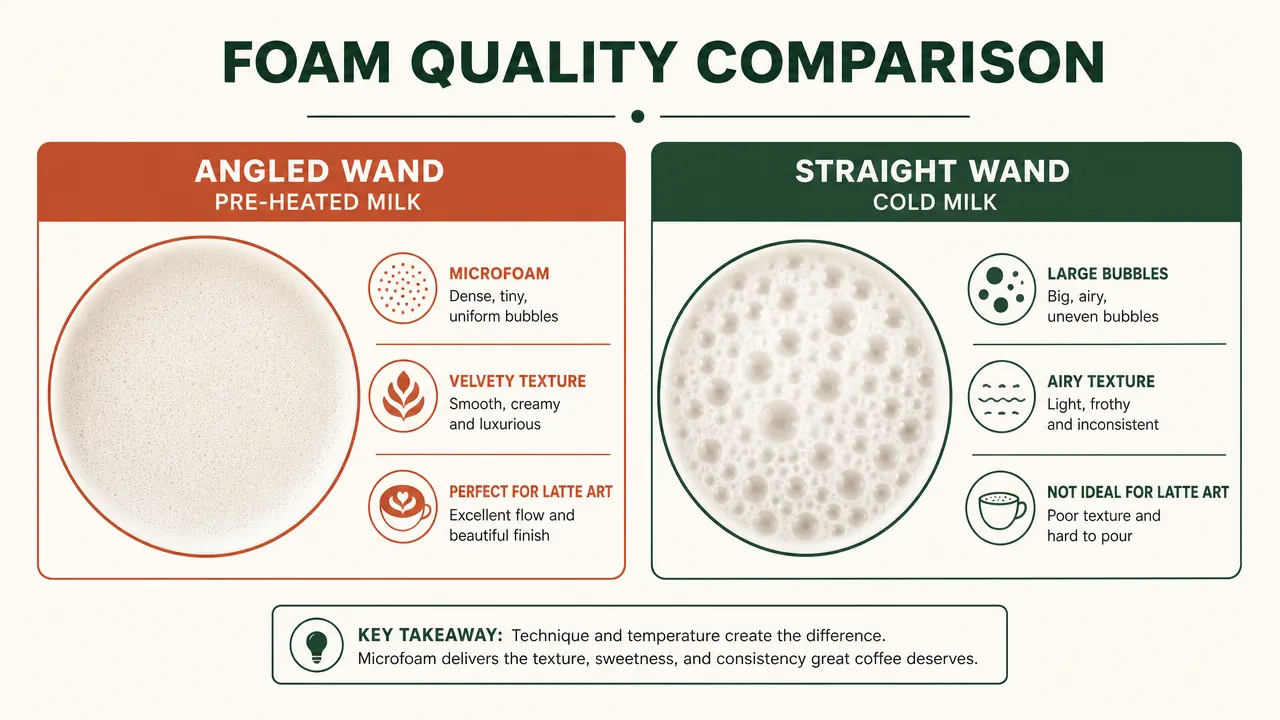
Here is the single most important thing I can tell you about this frother, and you will not find it on the product listing: the angle matters almost as much as the motor. If you hold the wand straight up and down in the center of the cup, you get a vortex that pulls air through the coil and produces large, loose bubbles. They look like foam from a distance, but they collapse within 30 seconds of hitting your coffee. That is what most first-timers experience and it is why they leave one-star reviews about foam that 'disappears immediately.'
The fix is to tilt the wand at roughly 30 to 45 degrees toward one side of the cup and position the coil just below the milk surface rather than deep in the liquid. This creates a rolling circulation that breaks air into much finer bubbles. The result is a denser, tighter foam that holds its shape for several minutes. The Zulay motor is fast enough that this technique works reliably; slower motors on cheaper wands cannot do it even with correct form. Give yourself three or four tries with this approach before forming any conclusions about whether the frother is working.
The second variable is milk temperature. Pre-heating your milk to around 130 to 150 degrees Fahrenheit before frothing, not after, changes the result dramatically. Proteins in the milk become more elastic at that temperature and stretch around the air bubbles instead of letting them pop. Cold milk from the fridge froths, technically, but the bubbles are larger and less stable. Two minutes in the microwave or a minute on the stovetop transforms the foam quality. This is not a frother problem; it is basic milk chemistry and it applies to every frothing method, including a $400 machine.
Hold the wand at 30 to 45 degrees, pre-heat the milk, and what you get is dense foam that holds for minutes. Miss either of those and you get something that looks like froth but dissolves before you can drink it. The Zulay is not the variable; technique is the variable.
Foam Density: How It Actually Stacks Up
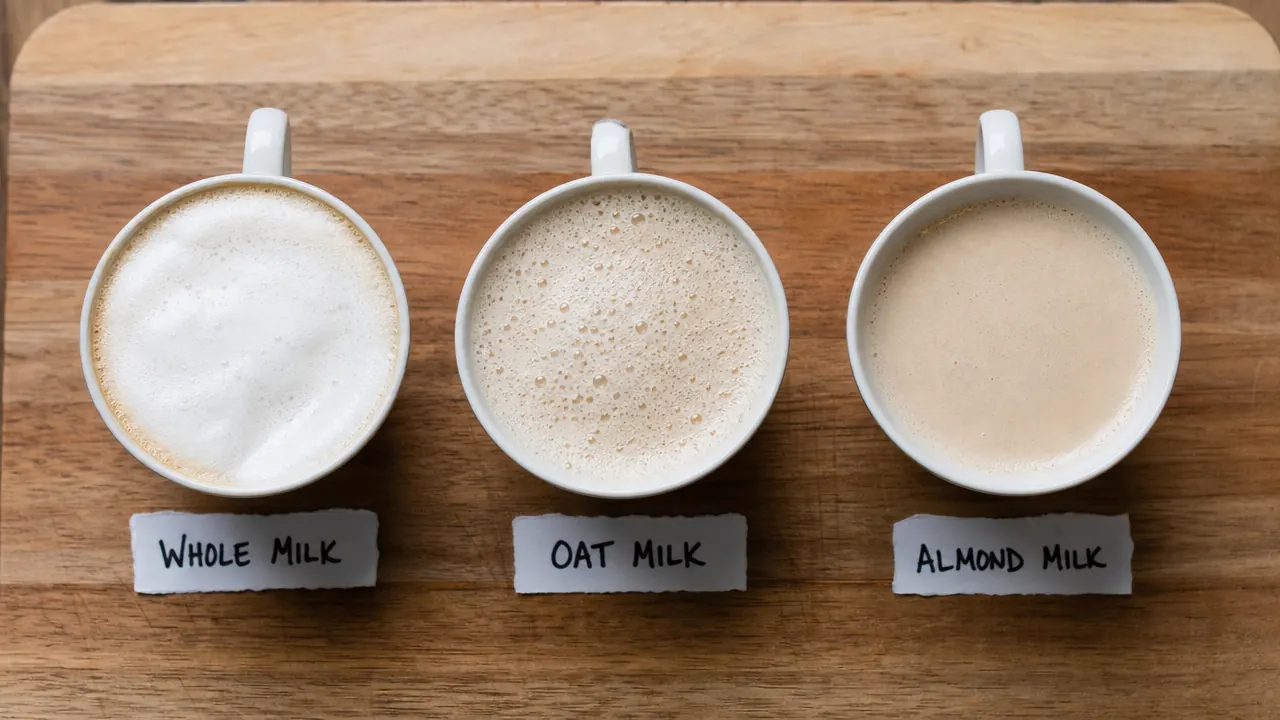
Let me be specific about foam quality because this is usually where handheld frothers get a bad reputation they may not fully deserve. When I use this wand with properly heated whole milk and correct angle technique, I get microfoam that is creamy, holds its peak for two to three minutes after pouring, and creates a visible contrast layer on top of a latte. It is not steam-wand foam. A trained barista would not mistake it for that. But compared to the alternative of no foam at all, or the thin frothy milk you get from a cheap pump frother, it is a genuinely satisfying result.
With oat milk, specifically barista-formula oat milk which has added fat and stabilizers, the results are nearly as good as whole milk. The foam is slightly lighter but it pours well and holds shape. Regular oat milk from a budget carton produces acceptable foam, maybe half the density of the barista version. Almond milk is the weak point. Lower fat content means the bubbles do not get nearly as stable; you get foam that sits on top for about 20 seconds before merging back into the liquid. For almond milk drinkers, this frother will still improve your drink over no frother, but manage your expectations.
One thing I tried that the product listing does not mention: using this wand on heavy cream for whipped cream. It works, though it takes longer than milk frothing and you need to keep the cream cold rather than heated. About 45 to 60 seconds of frothing in a narrow cup will give you lightly whipped cream suitable for topping cocoa or dessert drinks. Not the same as stand mixer whipped cream, but useful in a pinch and not something every frother buyer thinks to try.
Battery Life: The Honest Numbers
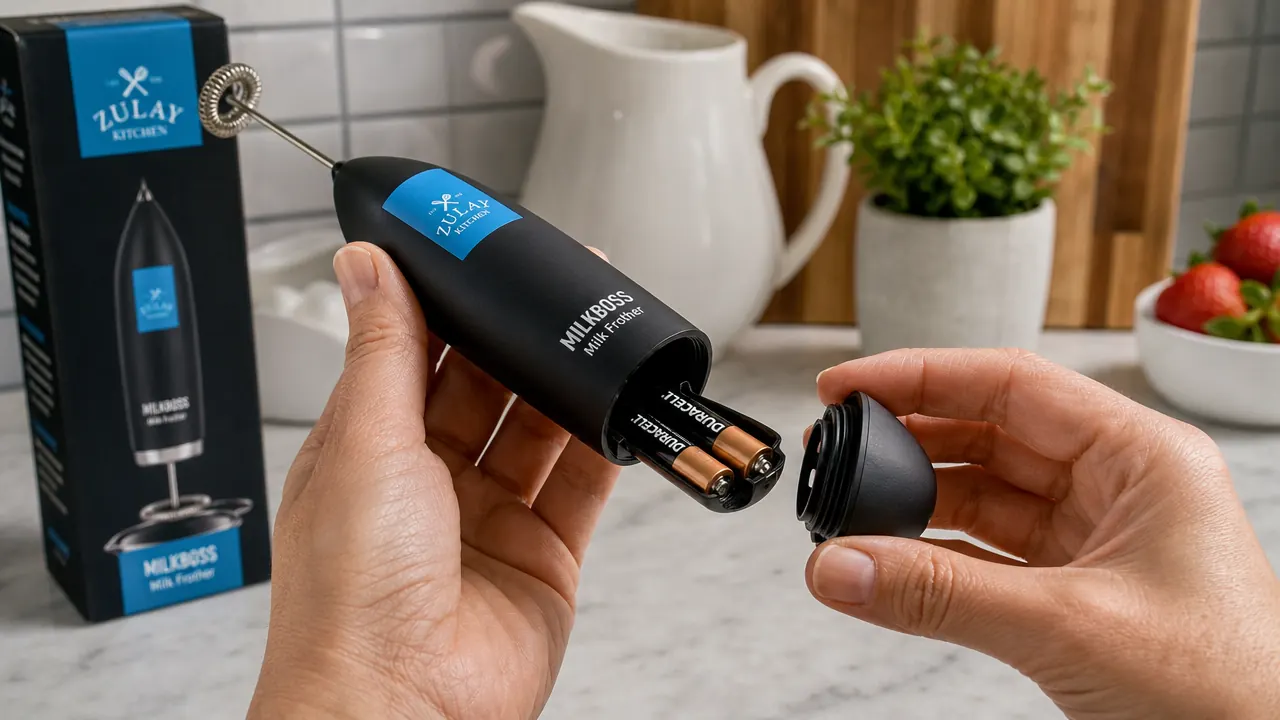
The Zulay uses two AA batteries, which it comes with included. The Z1 motor is rated for high-speed operation, and at that speed, battery draw is meaningful. In my testing, running the frother once a day for roughly 20 seconds per use, the included Duracell batteries lasted between five and seven months before I noticed the froth time extending noticeably. At six months, what used to take 20 seconds now took closer to 30 to 35 seconds for the same foam quality. At that point I swapped the batteries.
If you froth twice daily, expect to replace batteries every three to four months. That is not expensive, maybe a dollar and a half per month, but it is worth factoring in. If battery maintenance annoys you more than it should, that is a legitimate reason to look at a corded electric frother. The Nespresso Aeroccino runs off a power base and does not need batteries. You pay about five times more upfront for that convenience, but if you froth a lot and hate swapping batteries, the math might work out for you over time.
One thing I noticed that the product listing does not emphasize: the battery compartment on the bottom of the wand uses a twist-lock cap rather than a sliding cover. That design is more secure against accidental opening, but it also means you need two hands to swap batteries rather than one. Minor issue, but worth knowing before your first swap.
Build Quality and Long-Term Durability
The body is matte black ABS plastic. It is not going to feel like a premium kitchen tool; there is no heft to it and no metal casing. What matters more for longevity is how the internal components hold up, and the evidence on that is good. The Z1 motor and the coil spring mechanism have a reputation for outlasting cheaper competitors by a significant margin, which is why this frother has accumulated more than 237,000 reviews while cheaper alternatives cycle in and out of the market. The spring coil is soldered to a shaft rather than clipped on, which is where most handheld frothers fail first.
The one physical vulnerability is the lower section near the battery cap. The plastic is thinner there and if you drop the frother onto a hard tile floor from counter height, that is where a crack is most likely to appear. I have not had that happen, but I have read enough reviews to know it is the failure point when physical damage occurs. It is not a structural weakness in normal use, just something to keep in mind if you have a kitchen where things tend to get knocked off counters.
What I Liked
- Dense, cafe-quality microfoam is achievable with correct angle and temperature technique
- Z1 motor is meaningfully stronger and more durable than motors on cheaper wands
- Duracell batteries included, ready to use immediately without buying anything extra
- Works well for whipped cream, matcha blending, and protein drink mixing beyond just coffee milk
- Compact enough to store in a drawer, no counter footprint, no cord
- Cleanup is negligible: a five-second rinse in clean water is sufficient after every use
Where It Falls Short
- Significant technique learning curve; beginners get poor results before understanding wand angle and milk temperature
- Motor produces audible high-frequency buzzing that carries in a quiet kitchen
- Battery-powered adds ongoing cost and requires periodic swaps, roughly every 3 to 6 months
- Almond milk and very low-fat plant milks produce subpar foam quality regardless of technique
- Plastic body does not feel premium; the lower battery cap section is a potential impact point
Who This Is For
This frother is the right call for anyone who wants real foam in their home coffee drinks and is willing to spend five minutes learning the two technique points that make it work. If you drink lattes, cappuccinos, or matcha with steamed milk at home on a regular basis and you have been making them without any frothing tool, the improvement is dramatic. The price point means the barrier to trying it is almost nothing, and the 237,000-plus reviews give you a reasonable confidence floor that this is not a junk item that will die in a month.
It is also a strong choice for people who want portability. Because it runs on batteries with no power cord, you can pack it for travel, keep one at the office, or use it in a kitchen with no free outlets near the coffee station. Those use cases favor this format over a countertop machine. And if you are someone who makes drinks beyond lattes, the wand handles matcha powder blending and light whipped cream applications that a standard frother cannot touch.
Who Should Skip It
If your primary milk is almond or another ultra-low-fat plant milk, the results will disappoint you no matter how good your technique is. The fat content matters for foam stability and there is no technique that compensates for its absence. You would be better served looking at a frother with a dedicated heating chamber, like the Nespresso Aeroccino, which also spins the milk, heats it simultaneously, and handles lower-fat milks more gracefully. For a full side-by-side comparison, see how the Zulay frother stacks up against the Nespresso Aeroccino before you decide.
Skip it also if you genuinely cannot tolerate the noise. About 20 seconds of buzzing motor is a small thing for most people, but if you share space with a light sleeper or have a morning routine that requires near-silence, the automatic countertop machines with heating chambers operate more quietly. The trade-off is price and counter footprint, but those are real considerations. And if you want more perspective on what a simple $15 wand can and cannot do compared to machines that cost five times more, there is a full breakdown in the piece on 10 reasons a handheld milk frother beats fancy machines that is worth reading before you commit.
Good foam is not about the price of the tool. It is about understanding the two things that actually matter.
The Zulay Kitchen milk frother wand comes in around $15, includes Duracell batteries, and with the wand angle and pre-heated milk technique this article covers, it will produce foam that competes with coffee shop quality. Over 237,000 buyers have it. Check the current price on Amazon and see the full details before you decide.
Amazon Check Today's Price on Amazon →