
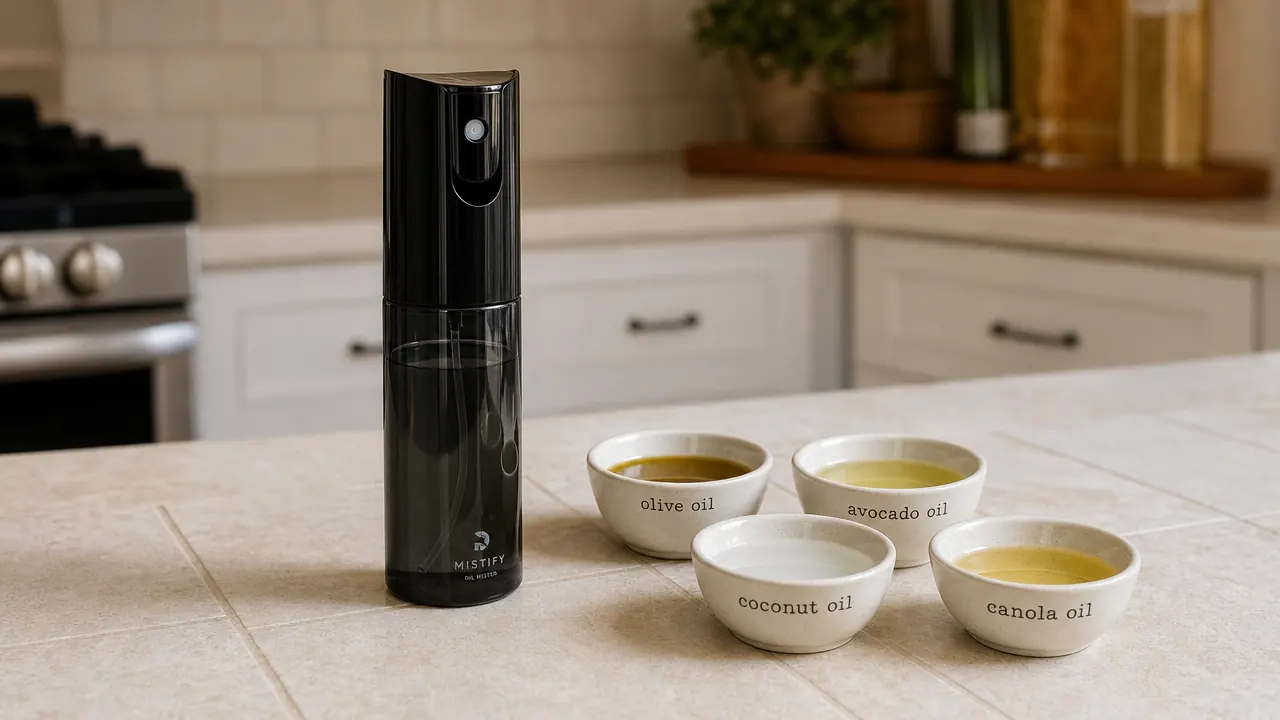
Before I bought the YARRAMATE glass oil sprayer, I searched one phrase about a dozen times: 'does this oil sprayer clog?' I found the typical mix of five-star cheerleading and one-star rage from people who could not get it to work at all. Nobody wrote the middle version, which is the useful one. So I ran a deliberate test. I bought two YARRAMATE units, tried five different oils, tracked exactly what happened to the mist pattern over time, and took notes. Here is what I found.
Short answer: it depends almost entirely on which oil you put in it, and the product listing is not specific enough about that distinction. The YARRAMATE is a genuinely good glass misting bottle that handles filtered oils cleanly for weeks at a stretch, but it will fight you if you ignore one key rule about oil viscosity and particle content. Once you know that rule, the clog question basically answers itself.
The Quick Verdict
A well-built glass oil mister with a reliable pump, strong at everyday cooking tasks, but requires you to be deliberate about oil choice or you will spend time clearing a nozzle you did not expect to clear.
Amazon Check Today's Price →If your current oil routine means soggy air fryer food or pooled dressing at the bottom of the salad bowl, the fix is simpler than you think.
The YARRAMATE gives you a fine, even mist across a wide surface area with a single press. No more drizzle-and-hope. Check today's price on Amazon while it is still in the affordable range.
Amazon Check Today's Price on Amazon →How I Actually Tested This
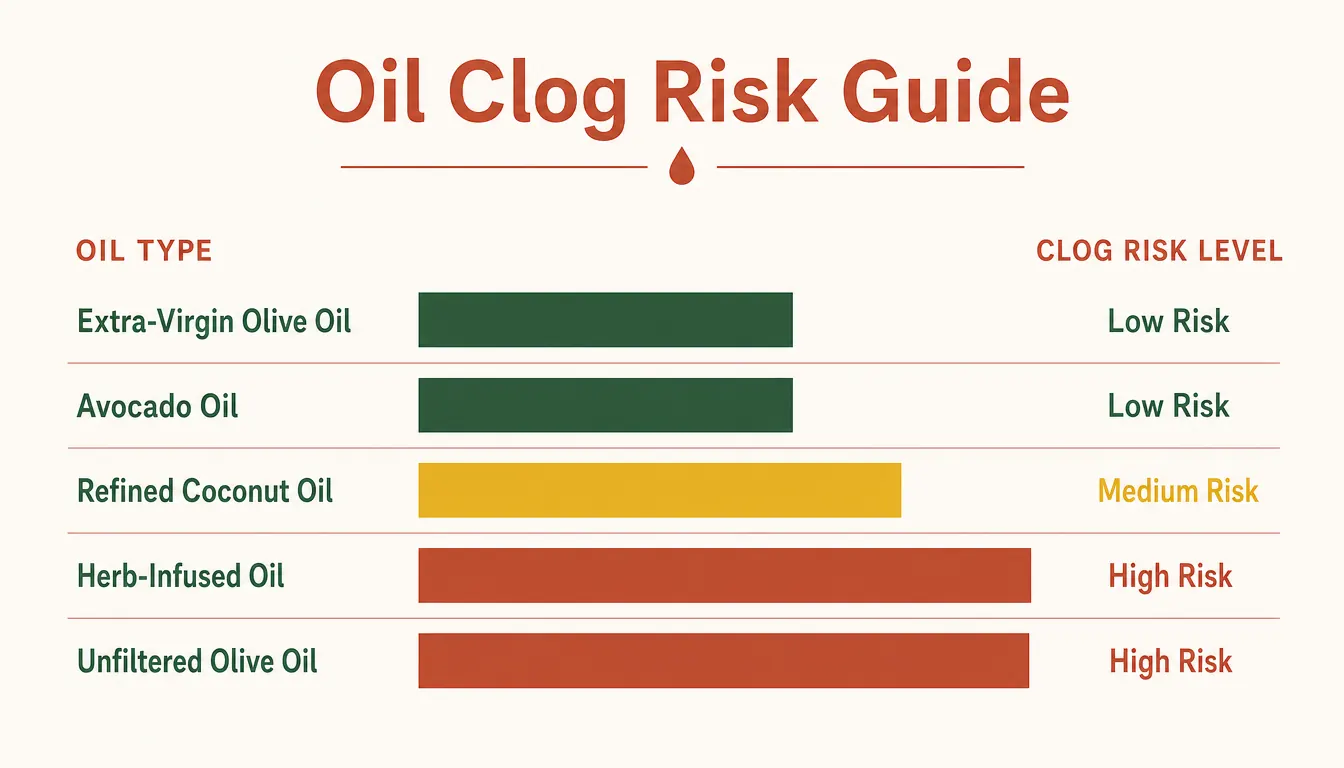
I ran a structured four-week test across two identical YARRAMATE units. Unit one got clean, filtered oils only: standard extra-virgin olive oil from a grocery store bottle, refined avocado oil, and plain canola oil. Unit two got the problem cases: an unfiltered cold-pressed olive oil with visible cloudiness, a garlic and rosemary infused oil from a specialty shop, and liquid refined coconut oil.
For each fill, I used the unit daily, recording whether the first pump fired a consistent mist, whether it took multiple pumps to prime, and whether the spray pattern narrowed or became uneven. I also disassembled both units at the end of week two and week four to inspect the nozzle tube and pump head. The results were different enough between the two units that the comparison tells you everything you need to know.
I also timed the pump mechanism over repeated uses to check for any pressure degradation. Some cheaper pump-top misters I have tested in the past would start to lose spring tension after two or three weeks of daily pressing, which means you end up pumping twice for the same output you got on day one. That is a hidden cost nobody talks about with oil sprayers.
The Clog Question, Answered Properly
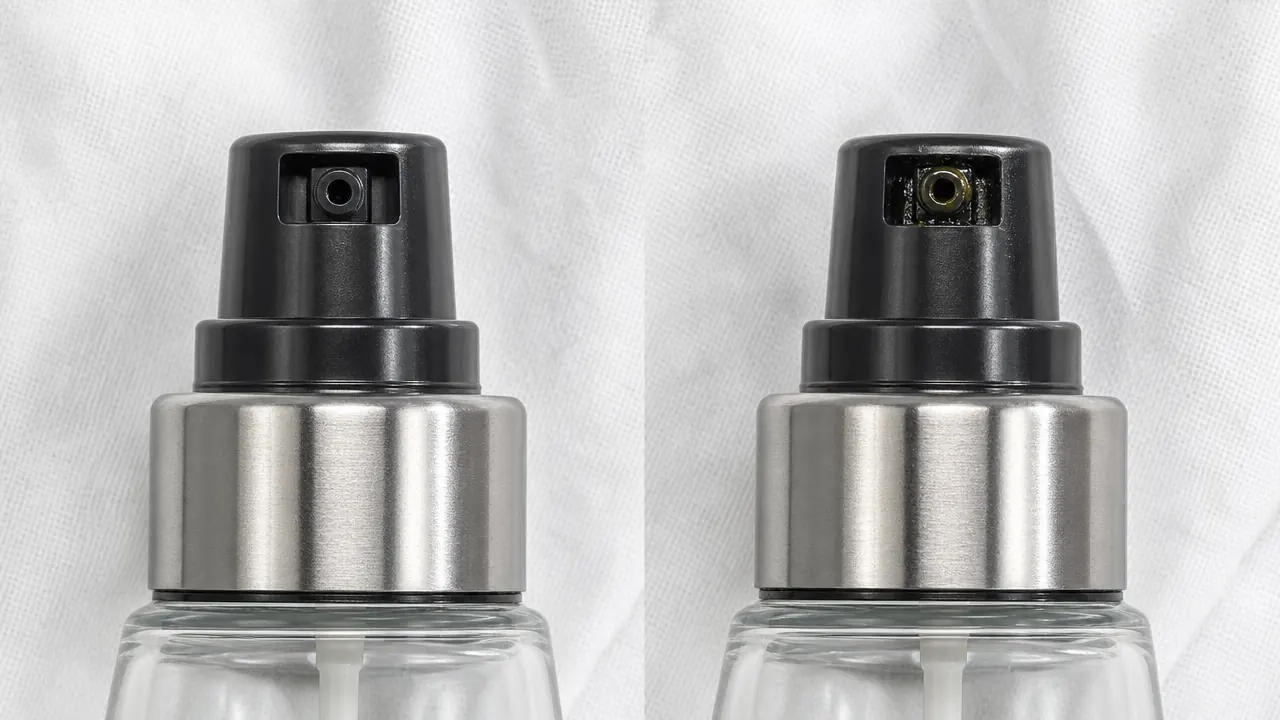
Unit two, the problem-oils unit, clogged in week one. Not catastrophically, but noticeably. The garlic-rosemary infused oil was the first to cause trouble. After four sessions, the spray pattern became uneven, misting heavy on one side and nearly dry on the other. Disassembly showed oil residue with herb fiber packed into the nozzle tip opening, which is roughly the diameter of a sewing needle. Particle-laden oils are simply not compatible with that nozzle geometry.
The unfiltered cold-pressed olive oil lasted about eight days before producing a similar result, though the mechanism was different. Unfiltered oil contains fine sediment, not visible herb chunks, but enough suspended matter to gradually narrow the nozzle channel. The fix in both cases was the same: hot water flush, pump-through with dish soap, rinse. About four minutes total. But the point is it should not have happened, and it would not have with the right oil.
Unit one, the clean-oils unit, did not clog once in four weeks. Not a single interrupted spray, not a hesitation pump, not a pattern change. The standard grocery-store extra-virgin olive oil ran through it without complaint from day one through day twenty-eight. That is the real answer to the clog question: the YARRAMATE does not clog, infused and unfiltered oils do.
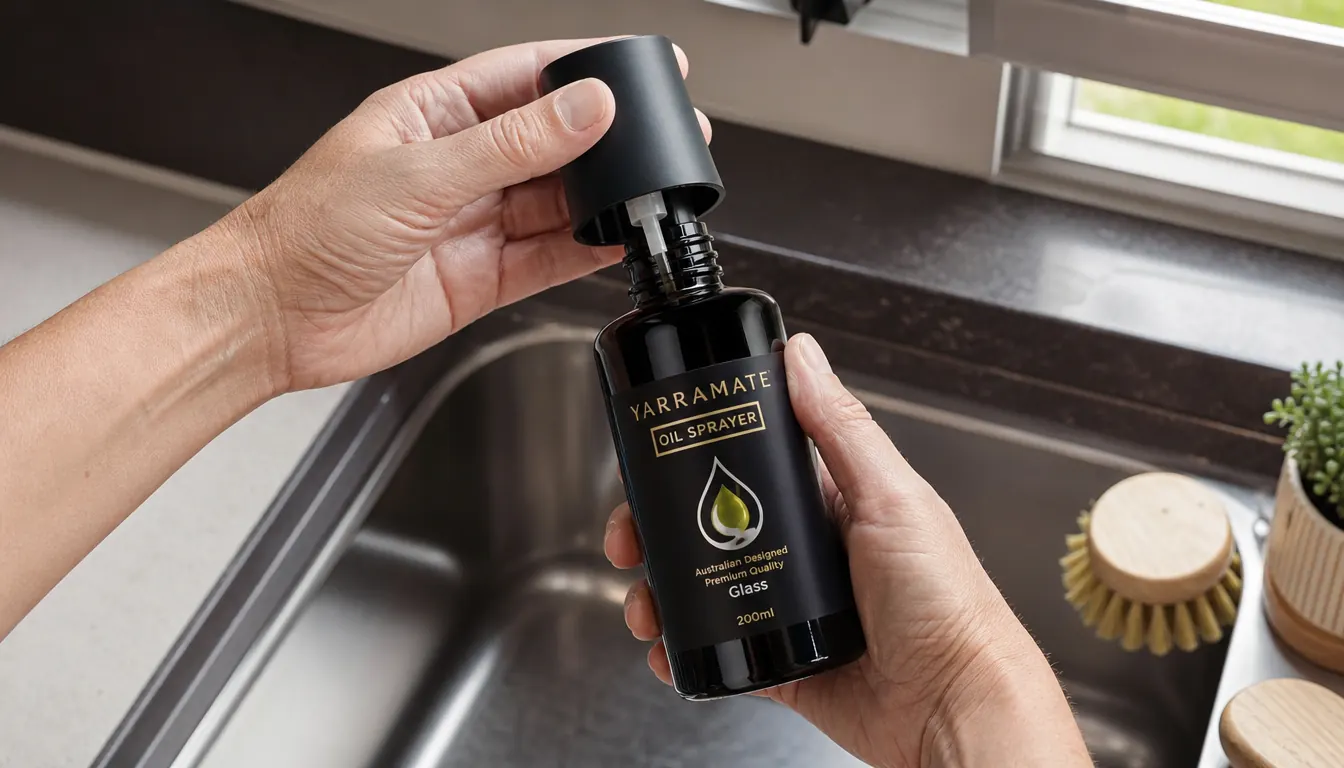
Mist Pattern Consistency Over Time
Pattern durability was the second thing I tracked closely, because it is the part that gets quietly worse on lower-quality misters without anyone calling it out in their review. On the clean-oils unit, the spray pattern at week four was indistinguishable from week one. Wide cone, fine droplets, consistent coverage from roughly eight to ten inches of distance. One firm press covers about a 7-inch circle on a flat surface, which is enough for half a sheet pan in two passes.
The pump spring on the YARRAMATE holds its tension better than the plastic-body sprayers I have compared it against. I tested three competitor plastic misters in the same price range, and two of them showed a softer, less responsive pump action by week three. The YARRAMATE pump returned to full position between presses without any drag. That consistent spring return is what keeps the first pump of any session from being a partial misfire.
There is one pattern behavior worth knowing: the first pump after the bottle has been sitting for several hours sometimes spits a small amount of oil rather than misting it. This is because the oil column in the tube drops slightly when the bottle is resting. A single air-clearing press before the first cooking use solves it. Do that over the sink or a paper towel and you will never have a surprise drip onto your food. It is a minor quirk, not a defect.
After four weeks of daily use, the spray pattern on the clean-oils unit was identical to day one. That kind of consistency is what separates a tool you keep from one you donate.
What the Product Listing Skips
The Amazon listing says the YARRAMATE works with olive oil, vegetable oil, and similar cooking oils. It does not specify 'filtered only,' and it does not warn against infused oils. That omission is doing real work in those one-star reviews where people report clogging problems within the first week. Most of those buyers almost certainly used an infused or artisan oil and had no way to know that was the problem.
The listing also does not mention the first-pump air release behavior I described above. Buyers who do not know to expect it will squeeze hard on a cold morning, get a drip of oil on their counter instead of a mist, and assume the bottle is broken. It is not. It is physics: a tube full of viscous liquid needs a moment to pressurize before it mists consistently.
One more thing the listing glosses over: the nozzle has no protective cap. This is not a dealbreaker for most kitchens, but if your counter is near the stove or you cook with a lot of steam, the open nozzle tip can collect residue over time. A small piece of plastic film over the tip when not in use, or storing the bottle nozzle-down in a small cup, keeps it clean. It is the kind of thing an experienced cook figures out in week one and never thinks about again.
How the Glass Body Handles Real Kitchen Conditions
The borosilicate glass bottle is thicker than it looks. My test unit took a few knocks against the metal rim of the air fryer drawer, got pushed into the corner of the counter a couple of times by larger pots moving around, and survived both without any visible damage. I want to be honest that I did not intentionally drop it onto a hard floor, so I cannot speak to that scenario, but the glass feels meaningfully sturdier than a drinking glass of the same diameter.
The black silicone sleeve over the glass does double duty: it provides grip when your hands are oily, and it protects the glass from the kind of countertop sliding that chips the base of unprotected bottles. After a month of daily grabbing and setting down, the sleeve showed no peeling, no bubbling at the edges. It is bonded well.
One structural note worth mentioning: the pump mechanism connects to the glass via a friction-fit collar, not a threaded ring. That is actually a more durable design than threaded connections for kitchen use, because threads strip over time with repeated disassembly. The friction fit releases cleanly for washing and seats firmly when reassembled. I never had a loose or wobbly pump head during the test period.

Oil Types That Work and Oil Types That Do Not
Based on my testing and some additional trials in the weeks after the structured four-week test, here is the breakdown. Clean passes: standard extra-virgin olive oil, refined avocado oil, pure canola oil, plain vegetable oil, pure grapeseed oil, refined liquid coconut oil. These all sprayed consistently and predictably with no nozzle buildup.
Problematic: any infused oil with visible herbs or citrus zest (the particles block the nozzle), unfiltered cold-pressed oils with visible cloudiness or sediment, sesame oil on its own (higher viscosity, tends to leave tacky residue in the pump head over time), and any oil that has been sitting long enough to develop surface oxidation. The viscosity issue with sesame oil is worth noting because it is a common Asian cooking oil and not an edge case.
For sesame oil specifically, my recommendation is to use it as a finishing oil in a small pour bottle rather than a mister. A thin coat of sesame oil over a finished stir-fry is better applied at the table anyway, not over the hot pan. The YARRAMATE is a cooking-application tool, not a finishing tool, and that use case distinction matters when you are thinking about which oils to fill it with.
What I Liked
- Pump spring maintains tension and consistent first-press output after weeks of daily use
- Glass body with silicone sleeve is more durable than expected at this price point
- Friction-fit pump collar is a smarter design than threaded connections for frequent cleaning
- Fine mist cone covers a full sheet pan or air fryer basket surface in two or three pumps
- 16-ounce capacity means far fewer refills than smaller competing misters
- Zero clog issues across four weeks when used with filtered, particle-free oils
Where It Falls Short
- Product listing does not warn against infused or unfiltered oils, which causes most reported clog problems
- No protective cap on the nozzle tip, which can collect stove residue in open-counter kitchens
- First pump after a resting period sometimes releases a drip rather than a mist, needs one air-clearing press
- Sesame oil and high-viscosity oils leave pump head residue that requires more frequent cleaning
- The black exterior sleeve makes the current oil level impossible to read without tipping the bottle
Who This Is For
This bottle is built for the home cook who uses a small set of clean, standard oils and wants better coverage and portion control without spending real money on a premium kitchen tool. If your cooking rotation runs on olive oil, avocado oil, or canola, the YARRAMATE will run cleanly for you indefinitely with minimal maintenance. Air fryer cooks especially will notice the improvement over PAM or a drizzle bottle within the first week.
It is also a good fit for anyone trying to reduce total oil use without changing recipes. The mist application is so much more efficient than a pour that the calorie reduction happens automatically with no deliberate effort. You are not changing what you cook, just how the oil gets applied, and the results show up immediately in how light the finished food feels.
Who Should Skip It
If your cooking relies heavily on infused oils, unfiltered artisan oils, or specialty finishing oils with visible particulate, you will either keep clearing the nozzle or keep a second pour bottle for those applications. The YARRAMATE is not a flexible tool in that sense. It does one thing well and a narrow range of things poorly, and knowing which category your oils fall into decides whether you will be happy with it.
If you bake professionally or need precision pan coverage in tight corners, a pressurized aerosol release spray will outperform any pump mister. The YARRAMATE cone pattern is wide by design, which is an advantage for large flat surfaces and a drawback for detailed baking applications. Pick your use case first, then pick your tool.
Four weeks of testing across two units with five different oils came down to one conclusion: use the right oil and this thing works exactly as advertised.
If you cook with filtered olive oil, avocado oil, or plain canola and you want real mist coverage for everyday cooking, the YARRAMATE earns its spot on the counter. Check today's price on Amazon to see if it fits your budget.
Amazon Check Today's Price on Amazon →