
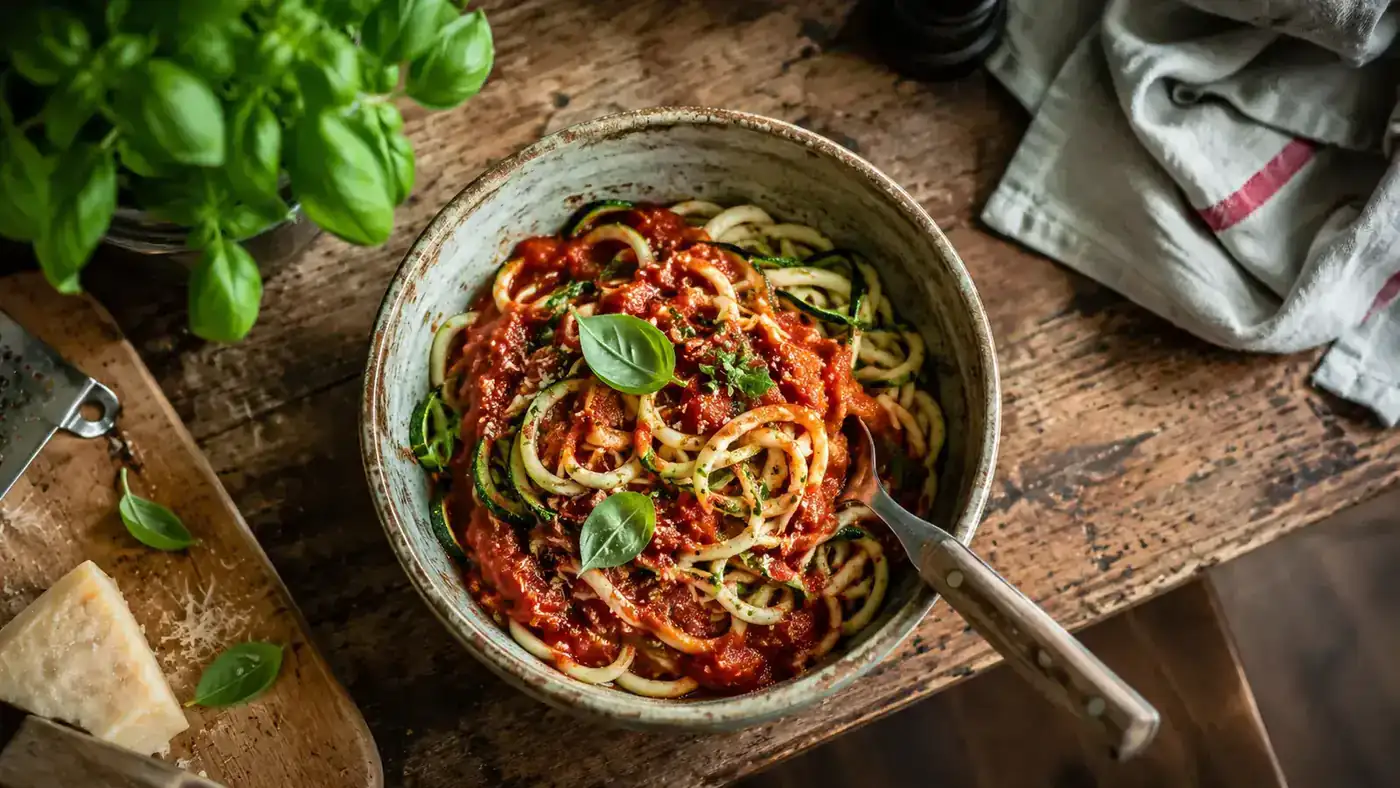
My wife put me on a low-carb eating plan about three years ago. I am a pasta guy, lifelong, so that conversation went about as well as you would expect. What saved us both was a spiralizer. I picked up the Fullstar 4-in-1 Vegetable Spiralizer after reading too many reviews at midnight, and it has been on the counter ever since. But the tool is only half the equation. The first few batches I made turned into a watery green mess on the plate because I skipped a couple of steps. This guide covers every step so you do not make the same mistakes I did.
Zucchini noodles are not hard to make. They take less time than boiling water for real pasta. The main things people get wrong are picking the wrong size vegetable, skipping the salting step, and cooking the noodles too long. Get those three things right and you will have a bowl worth eating. Skip them and you get a soggy puddle. Let me walk you through the whole process.
If you are buying a spiralizer, the Fullstar 4-in-1 is the one worth getting.
Four blade sizes, suction-cup feet so it does not slide, and a storage container for the blades. Budget-friendly and it has over 30,000 reviews. This is the one I use every week.
Amazon Check Today's Price on Amazon →Step 1: Pick the Right Zucchini
Size matters more than most people think. You want medium zucchini, around 8 to 10 inches long and about as thick as your thumb at the thinner end. That is roughly 1.5 to 2 inches in diameter at the widest point. Too thin and the noodles snap instead of spiraling. Too fat and you end up with flat ribbons or the core just pushes through without cutting properly. Farmers market zucchini and grocery store zucchini are both fine as long as they are firm, not soft or wrinkled. Soft means water logged, which means your noodles will release even more liquid during cooking.
Skip the giant zucchini. I know they look impressive in the garden but they have an oversized seedy core and very high water content. A medium, firm zucchini will give you cleaner strands and a better texture on the plate. Yellow summer squash works with the same sizing rules. If you want to try sweet potato noodles later, those are denser and require a bit more crank pressure, but the same principle applies: pick a uniform diameter vegetable so the blade cuts consistently all the way through.
Step 2: Prep the Zucchini for the Blade
Trim both ends with a sharp knife. You want a flat, clean cut on both the stem end and the blossom end. The flat end goes against the center spike on the Fullstar spiralizer, and a crooked cut there means the vegetable sits at an angle and your noodles come out uneven. Trim just enough to get a clean surface, maybe a quarter inch on each end. That is all.
You do not need to peel zucchini. The skin is tender, it holds the noodle together, and it adds color to the dish. If you are working with a butternut squash or sweet potato, those do need to be peeled first because the skin is too tough and it will jam the blade. For zucchini and yellow squash, leave the skin on.
Now set up your spiralizer. On the Fullstar, press the suction cup feet down onto a clean, dry countertop before you start cranking. A wet counter will let the unit walk around on you. I learned this the hard way when a whole zucchini went sideways across my cutting board. Select the blade for thin spaghetti-style noodles, which is the one most people want. The Fullstar comes with four blade inserts that store in the container attached to the back. The thin spaghetti blade is a good starting point for zucchini.
Step 3: Spiralize the Zucchini
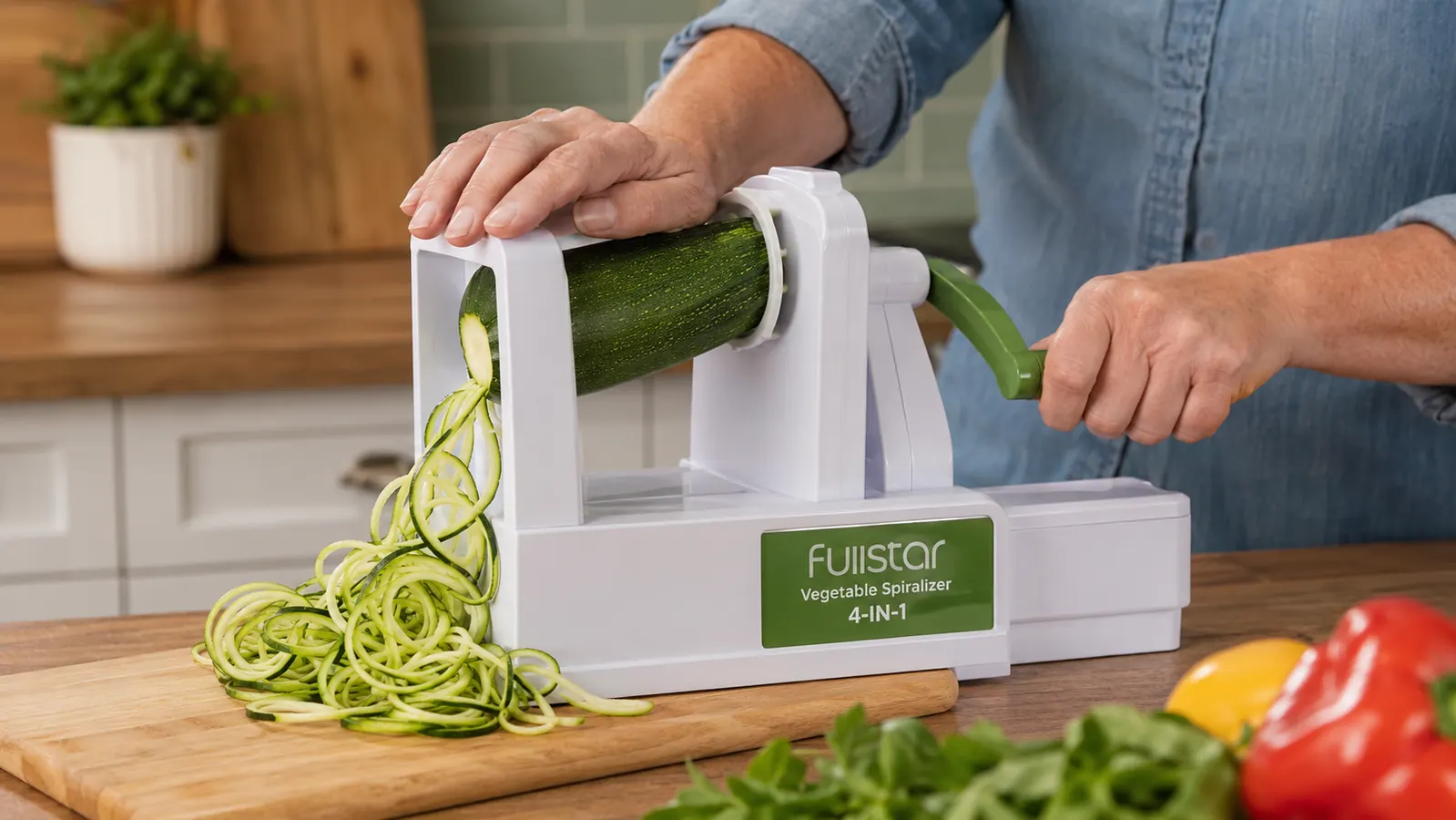
Place the flat trimmed end of the zucchini against the center prong of the spiralizer, pressing firmly so it seats. Then press the other flat end against the blade cover. Apply steady, even pressure as you turn the crank. You do not need to push hard, just steadily. The noodles will curl out the front as you crank. Most medium zucchini take about 15 to 20 complete turns to get through.
You will end up with a small cylindrical core piece left over when the zucchini runs down to about an inch. That is normal. Some people dice it and toss it into the sauce. Do not try to push the nub all the way through, you will just make a mess of the blade. Set it aside.
Most medium zucchini take about 15 to 20 crank turns to spiralize. The whole thing takes under two minutes. That is faster than waiting for a pot of water to boil.
Once the noodles are on the cutting board, take your kitchen scissors or a knife and cut through the pile two or three times. This gives you noodles around 6 to 8 inches long instead of one continuous 3-foot ribbon. Long noodles are dramatic but they are hard to eat and they tangle badly in the pan. Short cuts make everything easier.
Step 4: Salt and Drain the Noodles
This is the step most people skip, and it is the reason their zoodles turn into soup. Zucchini is about 95 percent water. When you heat it, that water releases. If you skip the salting step, all that water ends up in your plate diluting the sauce and making the noodles limp and watery.
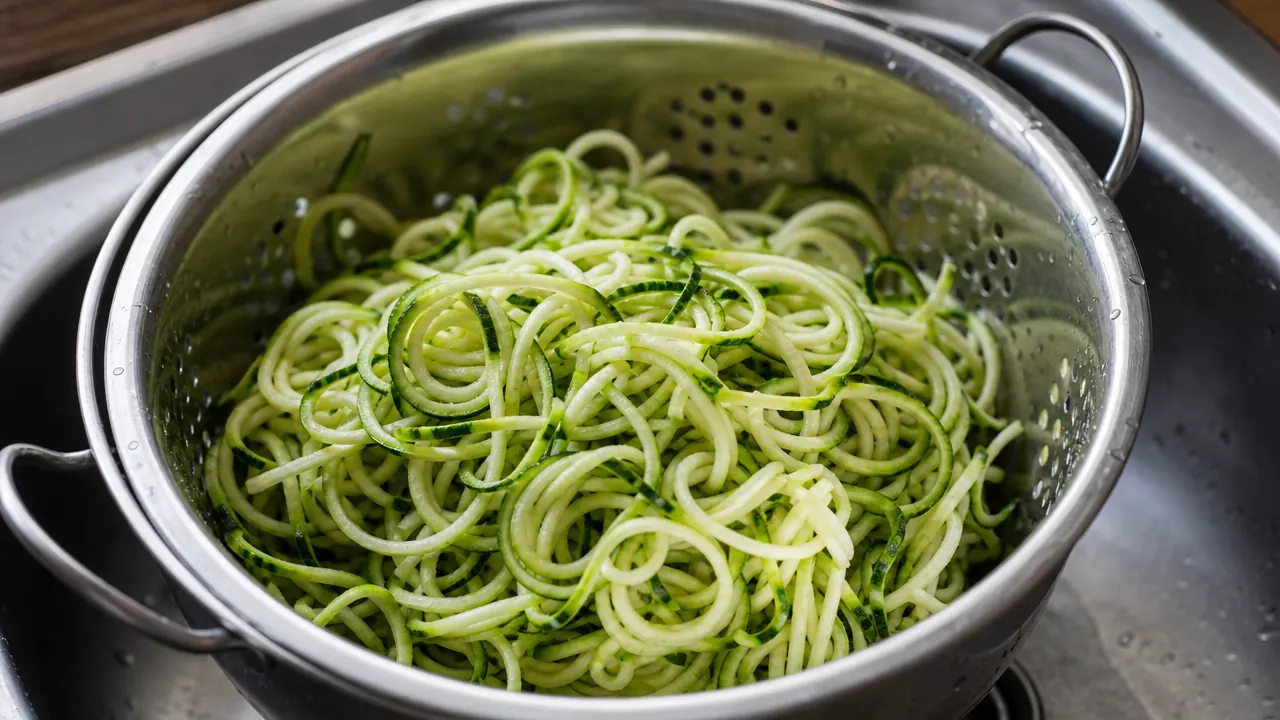
Transfer your noodles to a colander set over a bowl. Sprinkle them with about half a teaspoon of kosher salt per medium zucchini. Toss lightly to coat, then let them sit for 15 to 20 minutes. You will see actual water dripping down into the bowl below. After 20 minutes, pick up the noodles in your hands and gently squeeze out the remaining moisture, or press them down into the colander with a clean kitchen towel. Do not skip this. It is the single most important technique in this whole guide. Salted, drained zucchini noodles hold their texture in the pan. Unsalted ones fall apart.
If you are serving the noodles raw, which works well with pesto or a light vinaigrette, you can skip the salting step. Raw noodles have a pleasant crunch and the water content does not cause the same problem since there is no heat to drive it out. But any time you are cooking them with heat, salt and drain first.
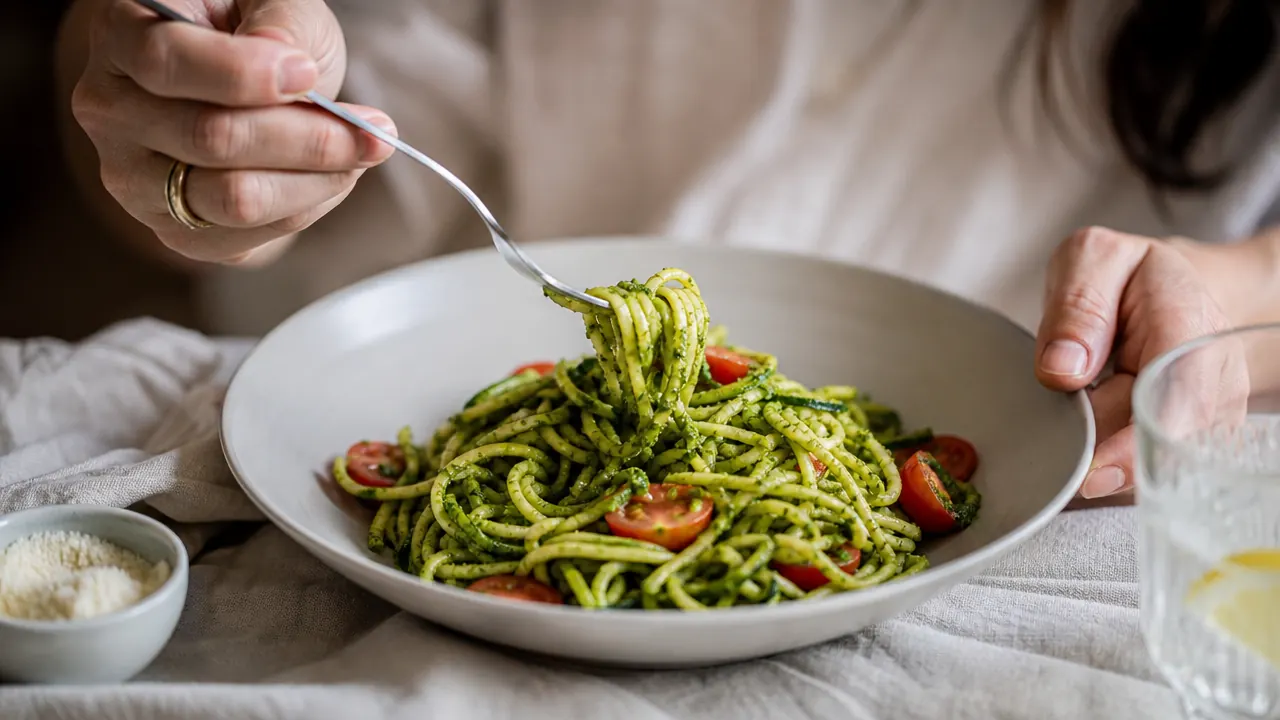
Step 5: Cook the Noodles (or Serve Them Raw)
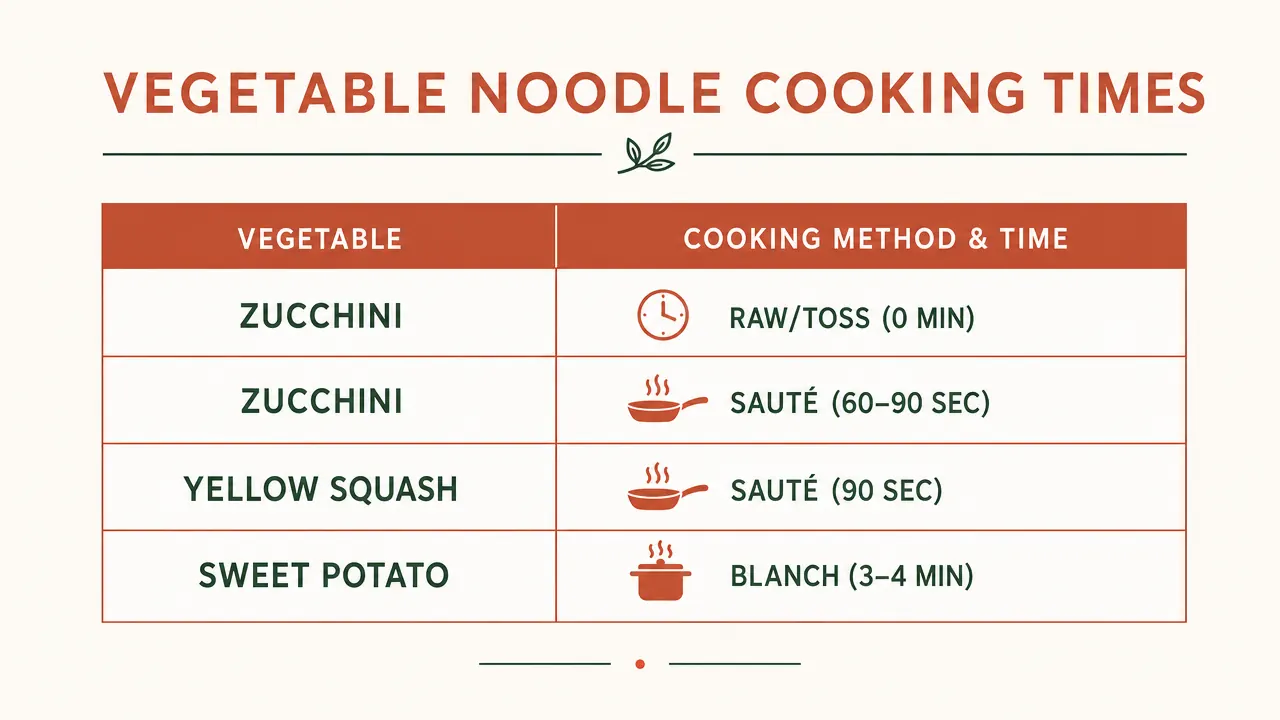
Zucchini noodles need very little cooking. A large skillet over medium-high heat with a small amount of oil, about 30 seconds of preheating, then your noodles go in. Toss them with tongs constantly. You want them to warm through and pick up a little color without releasing any more water. That takes 60 to 90 seconds. Not two minutes. Not five minutes. 60 to 90 seconds, then off the heat immediately. Overcooked zoodles go limp and mushy in under two minutes. Keep your eye on them.
If you are adding a heavy sauce like marinara or bolognese, heat the sauce separately and pour it over the noodles on the plate rather than cooking the noodles in the sauce. The liquid from the sauce combined with the heat will break down the texture fast. Plate the noodles, add the sauce on top, serve immediately.
For sweet potato noodles, the process is a bit different. They are denser and do not have the same water content issue, but they need a bit more cooking time. Blanch them in boiling salted water for 3 to 4 minutes, then drain and finish in the pan with butter and seasoning. They hold their shape better under heat than zucchini and have a pleasant sweetness that works well with garlic, sage, and brown butter.
Sauce Pairings That Actually Work
Not every pasta sauce translates well to zucchini noodles. Thick, chunky sauces that you would normally simmer pasta in are the most forgiving. Marinara, arrabbiata, pesto, and brown butter with sage all work very well. The zucchini has a mild flavor that takes on whatever you put with it.
Cream sauces work but they can make the dish feel heavy. If you are going low-carb, a lighter olive oil and garlic base or a fresh tomato sauce with basil will keep the whole bowl feeling light. Avoid watery sauces like brothy preparations or thin vinaigrettes when serving hot noodles, those will just increase the liquid on the plate. For raw noodle salads, a thick pesto or a tahini dressing holds up well without making things soggy.
What Else Helps
A good spiralizer makes this whole process faster and less frustrating. If you are fighting a cheap unit that slides around, has dull blades, or does not grip the vegetable properly, the experience is miserable. The Fullstar 4-in-1 stays put, the blades are sharp right out of the box, and it comes apart easily for cleanup. The blade container attached to the back keeps the inserts organized so you are not hunting through a drawer for the right piece. It also works on cucumbers, beets, carrots, and butternut squash, which extends its usefulness well beyond weeknight zoodles.
A few other things worth keeping handy: kitchen scissors for trimming the noodle pile, a colander that fits over a bowl for the salting step, and tongs for tossing in the pan. None of those are special purchases, but having them ready before you start makes the whole process move quickly. You can have spiralized, salted, drained, and cooked zucchini noodles on the plate in under 30 minutes start to finish, faster than pasta if you skip pre-boiling the water.
If you want the full picture on how the Fullstar spiralizer holds up over months of regular use, including blade sharpness over time and which vegetables give the best results, take a look at the long-term review. And if you are still deciding whether a spiralizer belongs in your kitchen at all, the weeknight dinner roundup covers ten practical reasons it earns the counter space.
Ready to make your first batch? The Fullstar spiralizer is budget-friendly and ships fast.
Four blades, suction-cup base, storage container included. It is the most-reviewed spiralizer at this price point for a reason. Check the current price on Amazon before you decide.
Amazon Check Today's Price on Amazon →