
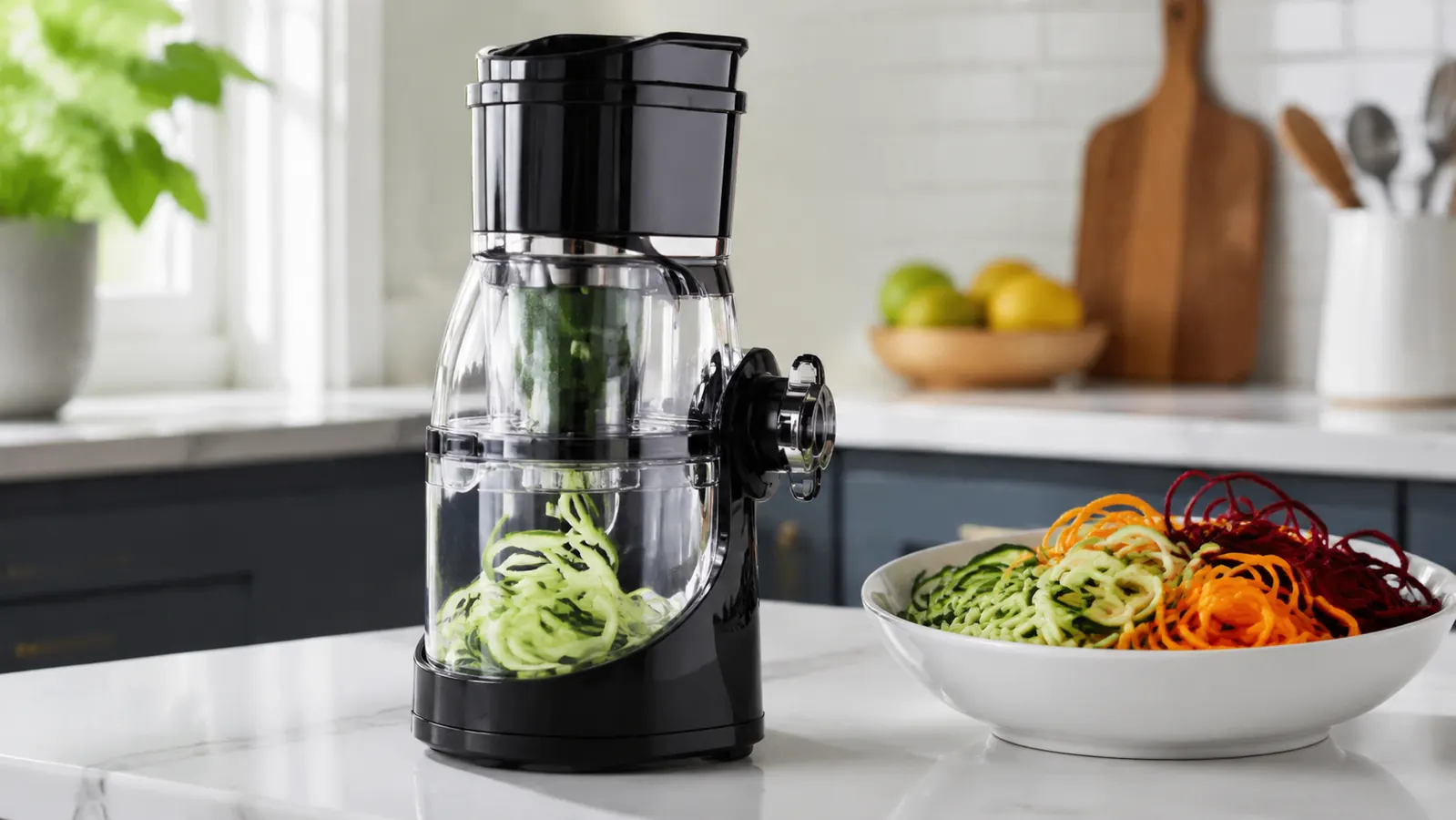
When I tell people I own the Fullstar 4-in-1 Vegetable Spiralizer, the first question is usually one of two things: does it actually work, or is it just another drawer orphan? After running it through more vegetables than I care to count, including a few that turned into genuine disasters, I have a plain answer. It works. It also has some habits the listing does not mention, and there are certain vegetables it handles poorly enough that you should know before you buy. This is not a cheerleading review. It is the rundown I wish I had read the afternoon I was staring at the product page.
The Fullstar spiralizer carries a 4.1 rating across nearly 31,000 reviews. That number is doing real informational work. A 4.1 means a lot of people are satisfied, and a meaningful number had real frustrations. Both groups are telling you something true. My goal here is to help you figure out which group you would land in.
The Quick Verdict
A capable budget spiralizer that delivers on soft vegetables like zucchini and squash, but stumbles on firm produce and requires a patient cleanup routine.
Amazon Check Today's Price →Still trying to decide if you will actually use a spiralizer? Check the current price first. At a low price point, it is easier to justify the experiment.
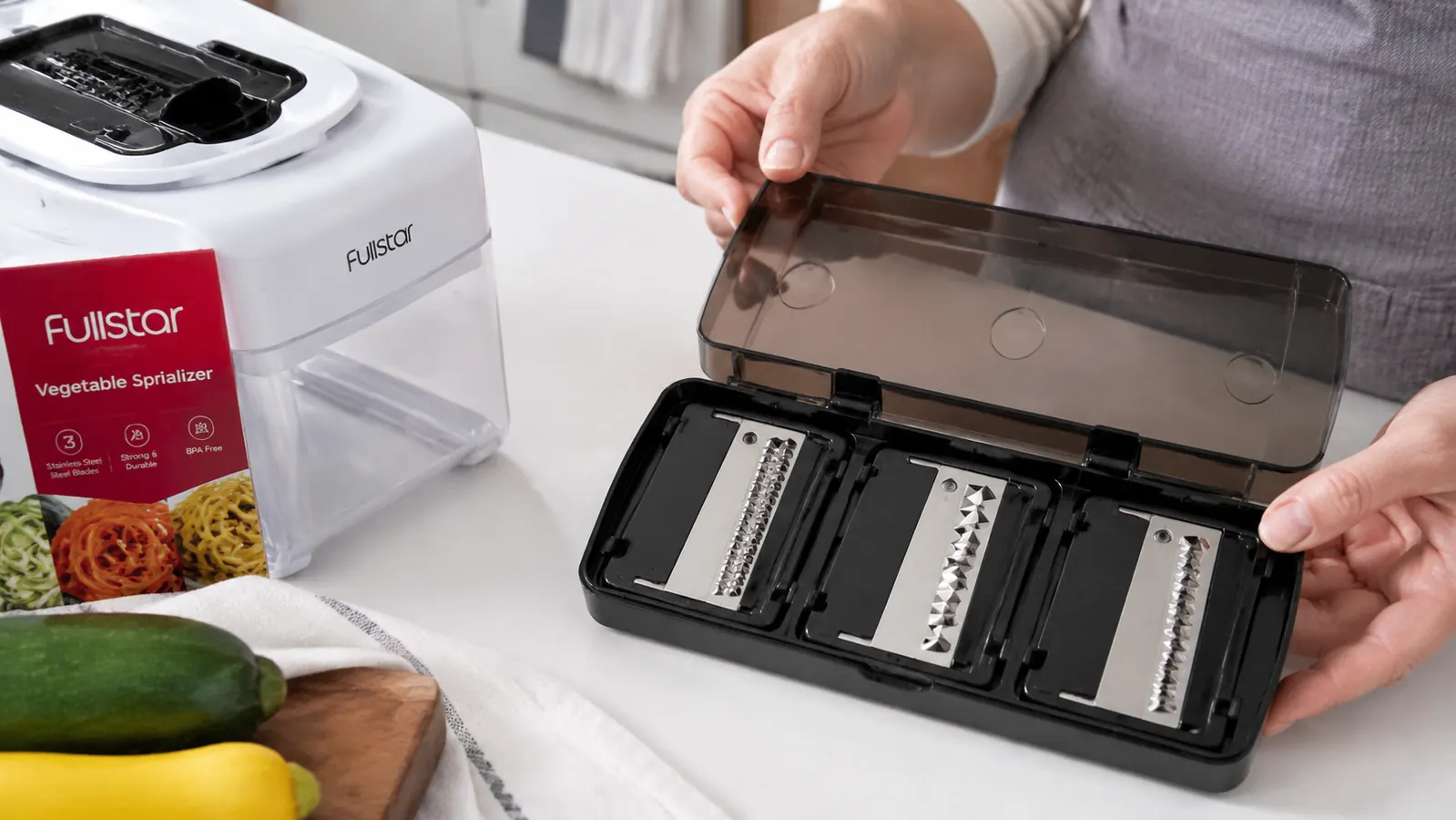
The Fullstar 4-in-1 ships with all four blades plus a blade caddy. The Amazon listing price shifts, so worth a look before it moves.
Amazon Check Today's Price on Amazon →What the Listing Does Not Tell You
The product photos show beautiful uniform zucchini noodles and the listing says four blades. What it does not say is that the usable vegetable diameter matters more than most people realize. The spiralizer works best with produce between one and two inches across. A zucchini at the peak of summer that has swelled to nearly three inches in diameter will fight you. The prongs that hold the vegetable against the blade are spaced for average market produce, not a monster garden zucchini or a large beet. If you grow your own vegetables and they tend to run oversized, you will need to trim them down or cut them in half lengthwise before loading them. Nobody writes that in the description.
The second thing the listing skips is the core waste. Every spiralizer leaves a solid cylindrical core when it finishes a vegetable. For a medium zucchini that is roughly the width of your thumb, running about an inch in diameter. For beets it is thicker. You do not get zero waste. On a smaller zucchini maybe ten percent of the vegetable does not make it into the noodles. That is not a defect, it is just physics. But if you are shopping thinking you will use every scrap of the vegetable, recalibrate that expectation. I save the cores and throw them in stock or a quick saute. Worth knowing going in.
How the Loading Mechanism Actually Works
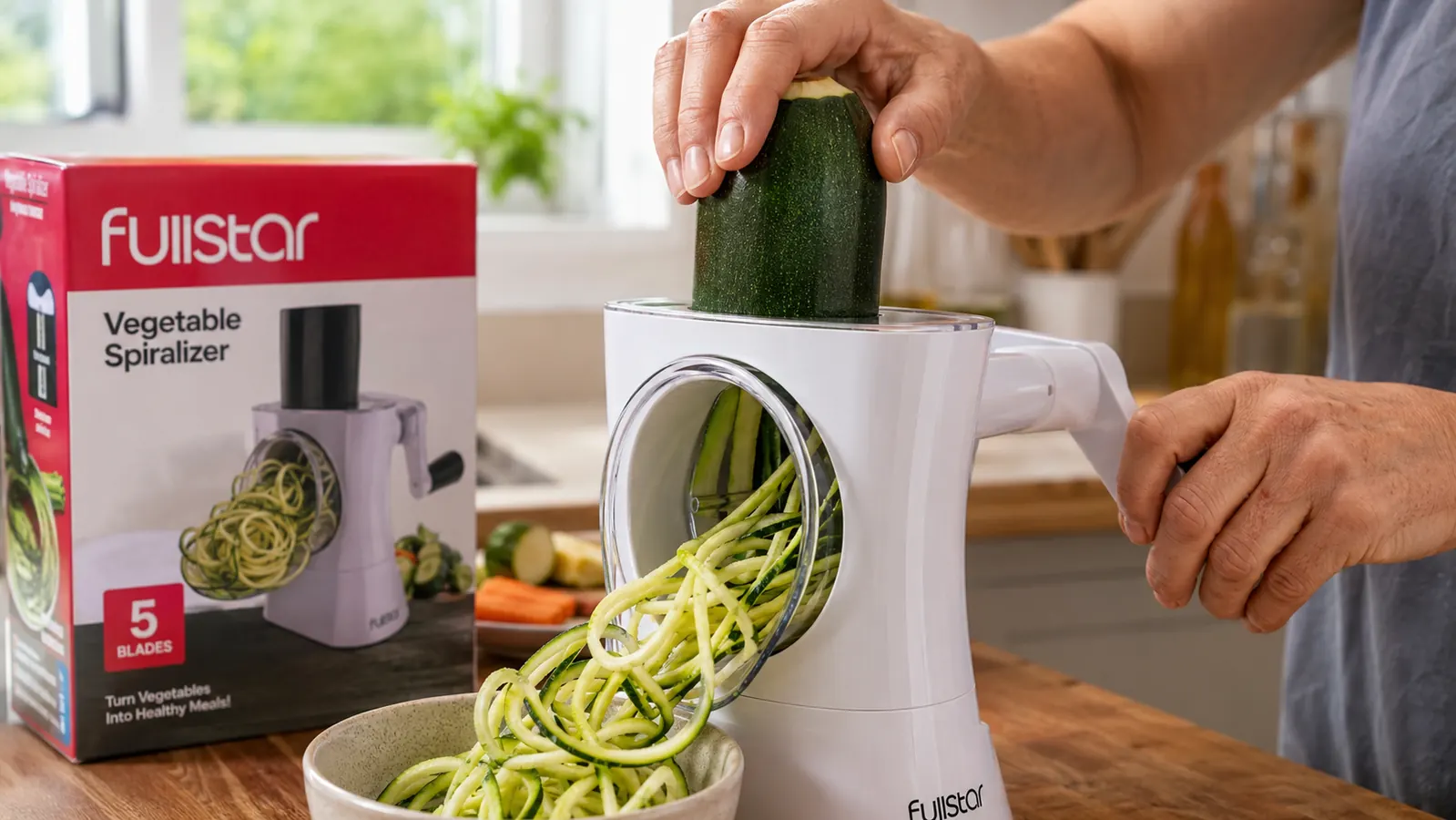
The way you mount a vegetable to the Fullstar is the learning curve that trips most new users. The vegetable goes between the blade assembly (a round blade disc on a central post) and the spiked prong at the back. You center it, press it firmly into the prongs so it holds, and then turn the side handle. If the vegetable is not centered or not firmly seated in the prongs, it will spin off-axis and produce ragged uneven noodles instead of clean spirals. The first few times I used this thing I got some ugly noodles because I was not seating the vegetable firmly enough. Once I figured out that you need to press it hard enough that the prongs genuinely bite in, the results got consistent fast.
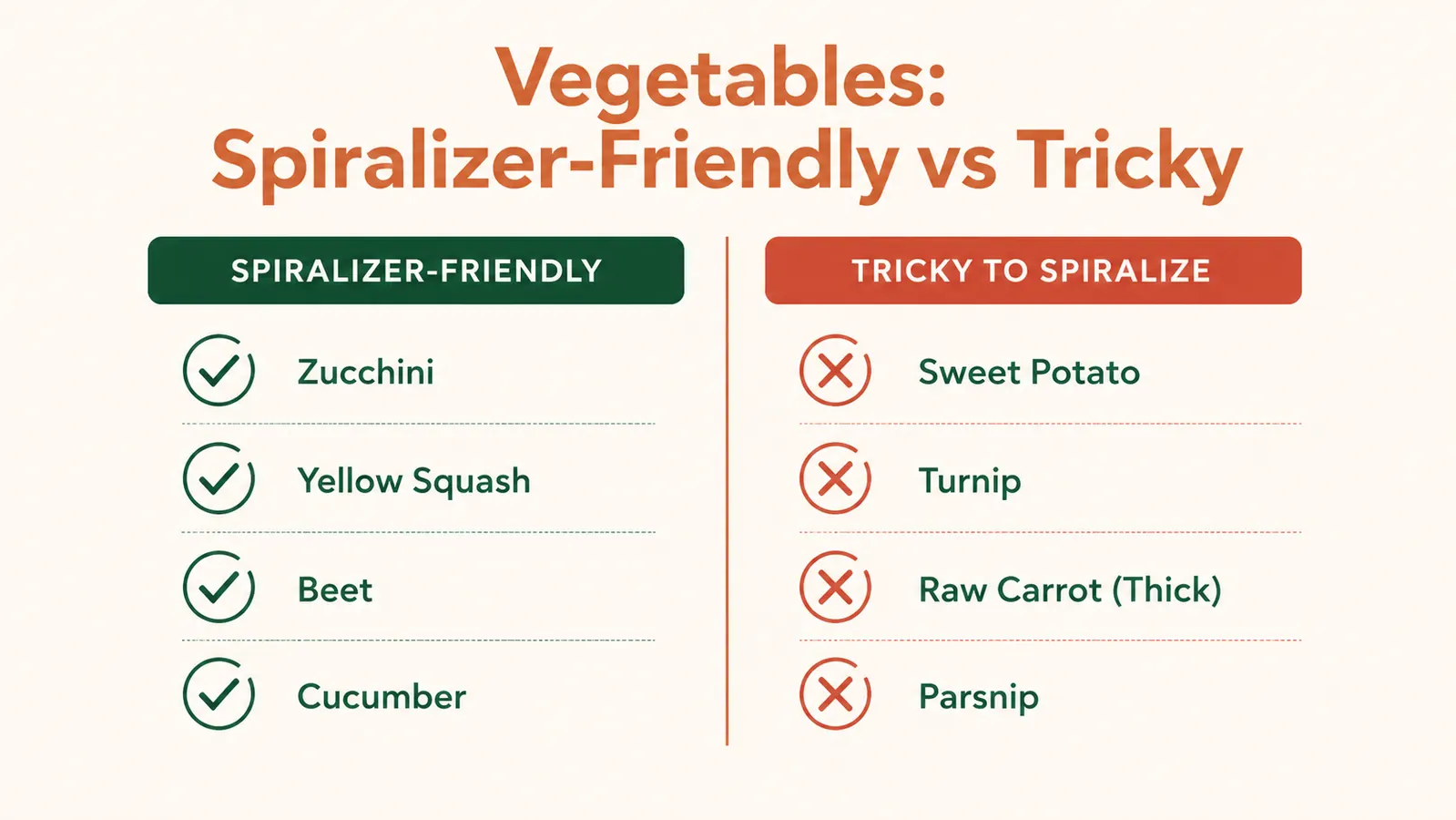
Firm vegetables require more pressure to seat properly. A sweet potato needs you to really lean into the prongs. The problem is that a sweet potato also requires real torque to turn once it is loaded. That combination of hard seating plus hard turning on a raw sweet potato is where the spiralizer gets difficult. I can do it, but it is the one vegetable where I question whether the effort-to-reward ratio makes sense. For the record, butternut squash peeled and cut to a reasonable diameter handles better than sweet potato at a similar firmness because the flesh is slightly more forgiving.
Blade-by-Blade: What Nobody Warned Me About
Most reviews talk about the four blades like they are all equally useful. In practice they are not, and the hierarchy matters. Blade A, the thin spaghetti-style spiral at 3mm, is the one you will use for at least eighty percent of your spiralizing. It is sharp, consistent, and handles almost any soft vegetable without drama. This is the blade the tool was designed around.
Blade B produces a wider ribbon, closer to a fettuccine width. It works beautifully on yellow squash and butternut squash, where the wider noodle holds up better to a heavy sauce. On zucchini it is fine but not as satisfying because zucchini releases water when cooked and a wider noodle goes limp faster than the thin spaghetti spiral. If you are planning to serve the noodles raw or lightly sauteed for only sixty seconds, Blade B is great. If you are adding them to a simmered dish, Blade A keeps its texture better.
Blade C, the thick solid spiral, is the one I use least. It produces a chunky noodle that works for something like a spiralized cucumber in a cold Asian-style salad with sesame and soy. Outside of that narrow use case I have not found a reliable purpose for it. Not a complaint, just a realistic assessment of how often it comes off the blade caddy.
And then there is Blade D. I will keep this blunt: Blade D is a marketing blade. It is the thin straight-slice option that looks good on a spec sheet and performs poorly in the kitchen. It is meant to produce thin coin-shaped vegetable slices. On a cucumber it can sort of manage this. On anything firmer it binds, skips, or produces slices that are more wedge than coin. If you are buying this spiralizer specifically to make vegetable chips or mandoline-style thin slices, look at an actual mandoline. Blade D is not the answer.
The thin spaghetti blade is doing ninety percent of the work in my kitchen. The other three blades are there, and two of them are genuinely useful. One of them is not worth the drawer space it sits in.
The Vegetables That Actually Made Owning This Worthwhile
I want to be specific here because vague food writing is useless. The three vegetables that made me glad I own this spiralizer are zucchini, raw beets, and yellow summer squash. Zucchini noodles with a simple garlic-olive oil sauce and a handful of cherry tomatoes is a fifteen-minute dinner that my whole household actually eats without complaint. That scenario alone justifies the purchase for someone who needs a fast weeknight vegetable option.
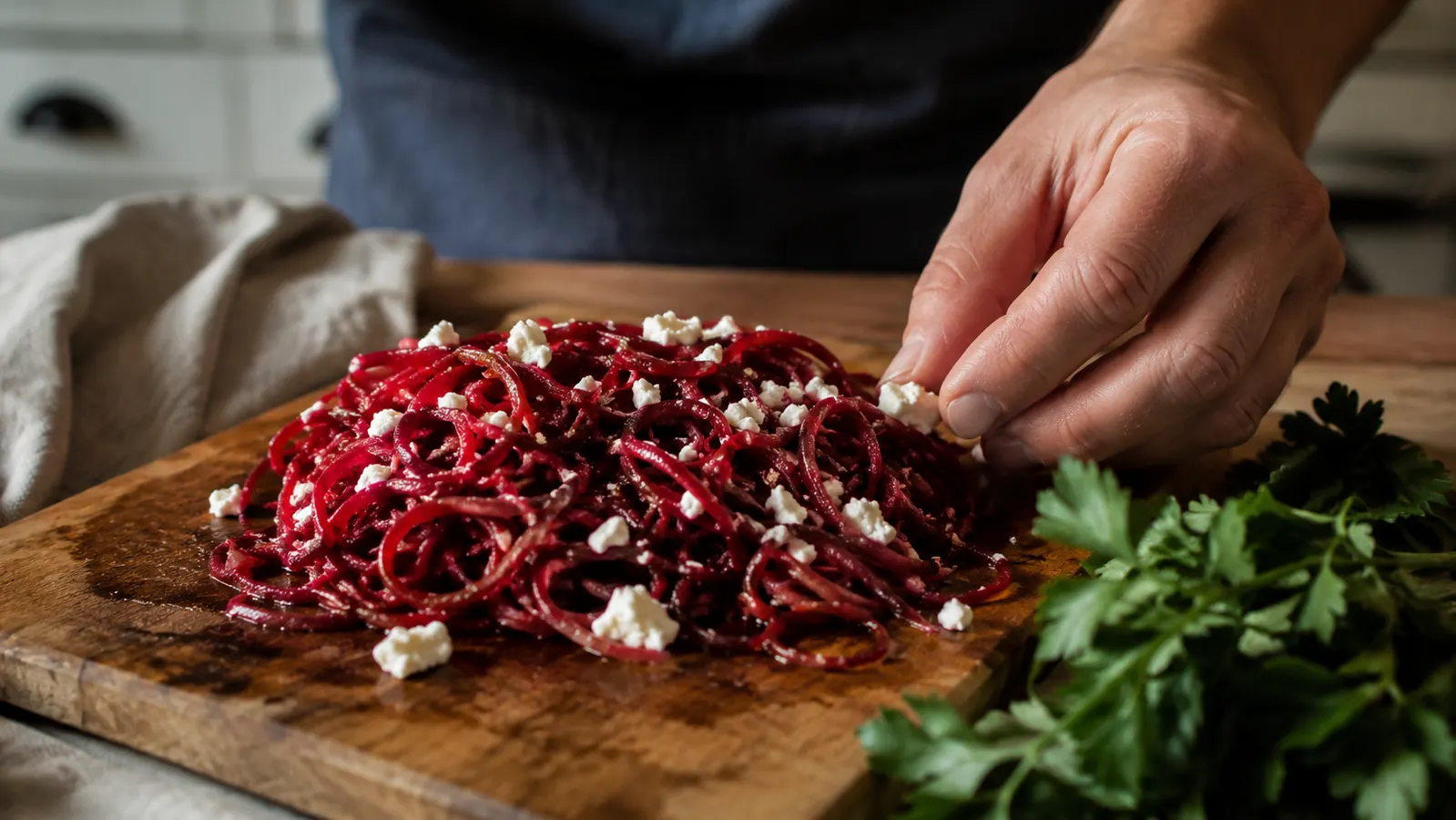
Spiralized raw beets, tossed with olive oil, lemon juice, and crumbled feta, became a cold salad I make about twice a month. The spiralizer turns a beet from a vegetable that requires a mandoline or a very patient knife session into something prep-ready in three minutes. One note: beets stain everything they touch, including the spiralizer. Rinse it under cold water immediately after beet use and you will be fine. Leave it sitting while you get distracted by dinner conversation and you will spend ten minutes scrubbing pink off white plastic.
Yellow squash with a brown butter and sage sauce was the third revelation. Yellow squash ribbons hold their texture slightly better than zucchini when hit with hot butter, and the wider Blade B noodle gives the sauce more surface area to coat. It is the kind of side dish that looks like you spent time on it when you actually spent four minutes. That is a good trade.
The Cleanup Problem and How to Handle It
This is the section most reviews either skip or gloss over, and it is the thing most likely to affect whether you keep using the spiralizer past the first month. The blades trap vegetable fiber in their teeth. The thin spaghetti blade in particular has a lot of tines per inch, and when zucchini or beet fibers get pushed back into those tines they do not come out with a rinse. You need a dedicated small brush, like the kind sold for cleaning bottle interiors or jar lids, to clear the blade teeth properly.
This adds time to cleanup. Not a lot, maybe three to four minutes if you do it right away, but it is not the thirty-second rinse the listing implies. The single most important habit with this tool is to run it under warm water and brush the blade within five minutes of using it. When the vegetable fiber is still wet it releases from the tines without much effort. When it dries it becomes fibrous and stubborn and the cleanup time doubles. I keep a small bottle brush on the counter specifically for this purpose. Once I stopped fighting it and just accepted that the brush is part of the process, I stopped being annoyed by cleanup.
The main body and the blade caddy are dishwasher safe, and the body goes in fine. I hand wash the blades because I want to keep the cutting edge consistent and I can inspect each blade for trapped fiber as I go. That is personal preference more than necessity.
Who Tends to Regret This Purchase
The people who seem most frustrated with this spiralizer, based on the pattern in the one-star reviews and my own experience with the tool's limits, fall into three groups. First: cooks who primarily want to spiralize hard root vegetables like raw sweet potato, turnip, or thick carrots. The Fullstar handles these but requires real effort and produces less consistent results than it does with soft vegetables. If that is your main use case, the frustration-to-reward ratio is going to work against you.
Second: anyone who expected the cleanup to be quick. If you hate doing dishes and want a tool that rinses clean in seconds, this one will wear on you. The blade cleaning is not difficult but it is deliberate, and if you build a habit of leaving it sitting while dinner finishes cooking, you will come back to a cleanup job that takes longer than it should.
Third: people who thought the four blades meant four equally useful blades. Getting two genuinely useful blades and two situational ones is not a bad deal at this price, but if you bought it expecting to rotate all four blades regularly you might feel like you got less than promised.
What I Liked
- Thin spaghetti blade is consistently sharp and produces clean, uniform noodles on soft vegetables
- Suction cup feet hold firmly on smooth counters without creeping
- Blade B (fettuccine ribbon) works exceptionally well on yellow squash and butternut squash
- Blade caddy protects the sharp edges in a drawer and prevents finger nicks
- At the current price, the cost of entry is low enough to justify trying spiralizing without regret
Where It Falls Short
- Blade D (straight slicer) is essentially unusable on anything firmer than a cucumber
- Oversized vegetables above about two inches in diameter need to be trimmed before loading
- Blade tines require a small brush to clean properly, not just a rinse
- Sweet potato and other dense root vegetables require significant torque to spiralize
- Core vegetable waste is unavoidable; roughly one inch of diameter per vegetable does not spiralize
How This Compares to Just Not Owning a Spiralizer
The honest case for owning this tool is not that it makes you a better cook. It is that it makes a specific category of cooking accessible that would otherwise require either buying pre-spiralized produce (which runs out fast and goes mushy quickly) or doing a tedious knife job that most home cooks skip entirely. If you have ever stood in the produce section looking at a zucchini and thought about zoodles and then put it back because you could not face cutting it into noodles by hand, the Fullstar solves that exact problem.
If you want more context on how the Fullstar stacks up against the OXO Good Grips model, I walked through the full head-to-head including price, blade quality, and cleanup differences in the Fullstar vs OXO Spiralizer comparison. And if you want the fuller picture of how I have actually used mine over time, the long-term spiralizer review covers the durability side in more detail. Both articles get into specifics that this one leaves out.
Who This Is For
The Fullstar spiralizer earns its counter space for a home cook who wants to cook with zucchini, yellow squash, or beets more often and is looking for a practical way to make those vegetables interesting without spending a lot of money or time. It is particularly well matched to someone who is experimenting with lower-carb eating and wants to try the pasta-substitute approach before committing to making it a permanent kitchen habit. At this price, the experiment costs almost nothing, and if you end up using it twice a week, the tool pays for itself in time saved within a couple of months.
Who Should Skip It
If hard root vegetables are the center of your cooking, look at a sturdier model with better torque leverage or a motorized option. If quick cleanup is non-negotiable for you and you resist learning a new cleaning habit, this tool will frustrate you faster than it rewards you. And if you are hoping to use it as a mandoline substitute for thin slicing, the straight-slice blade does not do that job reliably enough to count on it.
Two useful blades and solid suction cups at a budget price is a reasonable deal, especially if zucchini and squash are already in your regular rotation.
The current price and review count are worth checking directly. Over 30,000 reviews means there is real signal on what breaks and what holds up, and the listing price on tools like this moves more than you'd expect.
Amazon Check Today's Price on Amazon →